


Guest contributor
Shafiur Rahman
The Bangladesh Nationalist Party (BNP) government of Bangladesh has a damning verdict on how former Prime Minister Sheikh Hasina handled the Rohingya crisis: years of theatre, donor-chasing and “show-off activities” that prolonged the suffering.
It is a fair charge. The awkward question is whether the BNP is doing anything different.
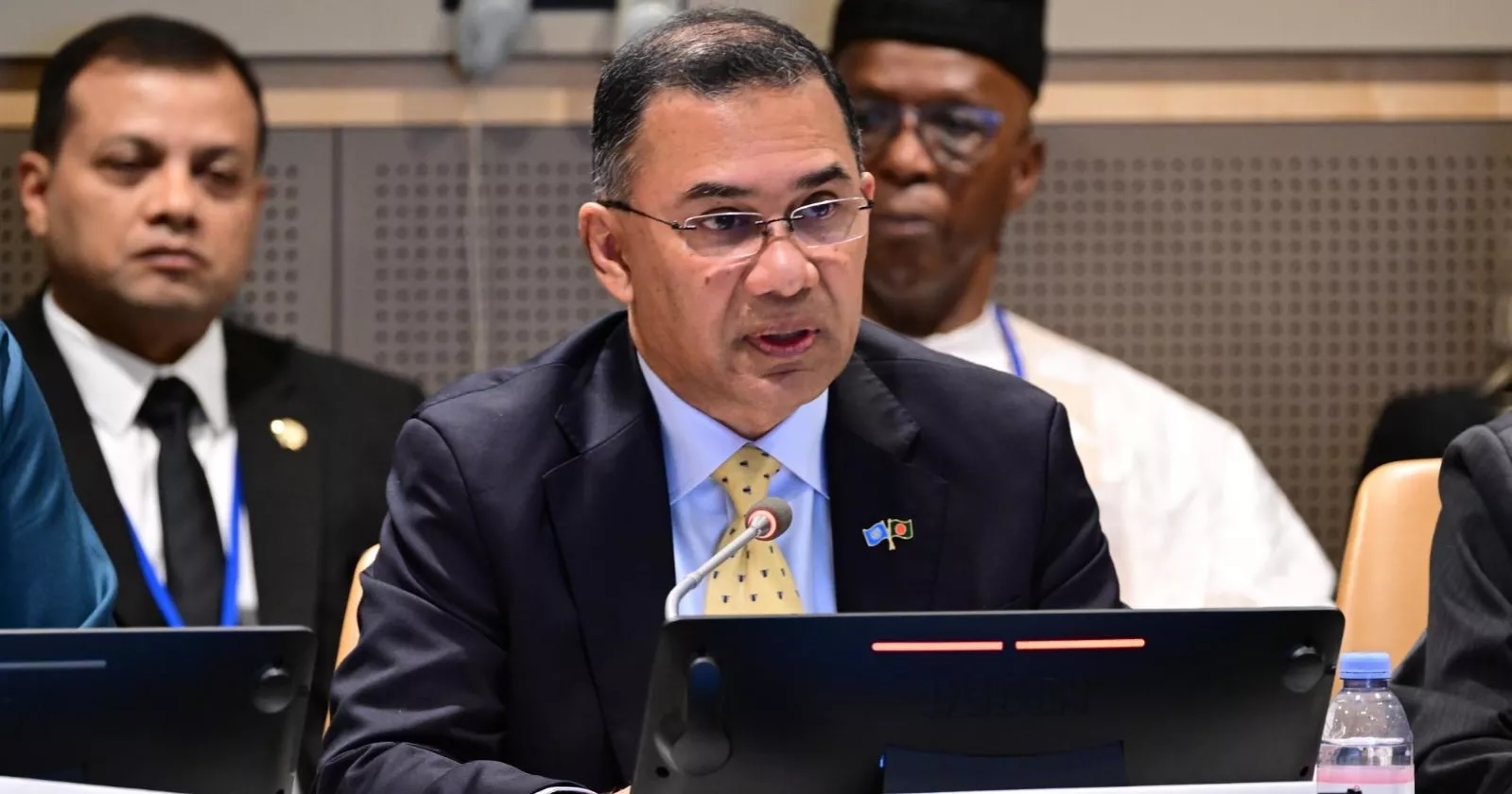
Bangladesh Foreign Minister Khalilur Rahman recently assumed duties as President of the 81st session of the United Nations General Assembly.
Congratulations poured in from every corner, not least from Rohingya organisations eager to see what his leadership might deliver.
Just before he flew off to the United States, he delivered a harsh verdict on the previous government’s handling of the Rohingya crisis.
In June, Khalilur Rahman told parliament that the Awami League government “failed to take steps to resolve the crisis, instead seeking donor funds while portraying it as a humanitarian disaster,” the Daily Star reported.
This, he said, diverted attention from the plight of the Rohingya and prolonged the catastrophe simply to secure donor funds.
By September, he was even more dismissive, telling lawmakers ahead of the U.N. General Assembly that the previous regime’s diplomacy was little more than “show-off activities.”
Yet from the U.N. General Assembly podium, his own government’s strategy looks remarkably familiar.
It continues to ask donors to underwrite the camps while dangling the fiction of a bilateral return to Myanmar’s war-torn Rakhine State – the very posturing Khalilur condemned.
Undeniably, Khalilur Rahman’s charge against the Awami League has considerable force and truth. The Awami League treated the Rohingya as a humanitarian burden to be managed/leveraged and financed, rather than a political people whose expulsion required a political solution.
There was no shortage of activity. There was the barbed wire fencing of all the refugee camps. There was the $300 million USD Bhasan Char prison-island relocation project, a pilot visit to Rakhine, donor conferences and showcase projects in Ukhiya, Bangladesh.
Myanmar delegations have visited Rohingya in the camps on several occasions. Former minister, Win Myat Aye, who is now in the National Unity Government (NUG), visited in April 2018 with a National League for Democracy (NLD) government delegation.
He arrogantly came to dictate the conditions Rohingya refugees must accept before repatriation to Myanmar was possible.
There were failed repatriation exercises involving prepared buses at the border and repeated list verifications with the authorities in Myanmar.
And yet no Rohingya returned safely through an organised repatriation programme. There was movement everywhere and progress nowhere.
Khalilur Rahman wanted to draw a line between that record and the approach of the new government. Bangladesh, he said, was now pursuing diplomacy “at the bilateral, regional and international levels” to secure a swift and sustainable solution.
Its objective was the “safe, voluntary and sustainable repatriation” of the Rohingya. A national strategy committee chaired by Prime Minister Tarique Rahman had been formed, alongside another committee led by the home minister to oversee security and order in the camps.
All this, we were invited to believe, was a serious government replacing Sheikh Hasina’s political theatre.
Prime Minister Rahman’s five-point proposal at the U.N. was supposed to demonstrate that difference. Instead, it raised serious doubts about whether anything fundamental has changed.
The irony is hard to miss. Staging another high-level U.N. event with grand speeches and yet another roadmap risks becoming the exact performance Khalilur condemned.
The government is already falling back on familiar scripts about safe, voluntary repatriation and global diplomacy.
Without concrete demands, a realistic plan for dealing with the Arakan Army, which controls most of Rakhine, and measurable benchmarks, the break from the previous government’s showmanship remains entirely cosmetic.
Before presenting the plan, Tarique Rahman offered a little family history. He reminded the audience that repatriations had been organised under the governments of his father,
Ziaur Rahman, and his mother, Khaleda Zia. He presented them as historical precedents of diplomatic resolution.
Calling those operations ‘repatriations’ is fiction. In 1978, thousands of refugees starved to death in Bangladeshi camps under deliberate ration cuts designed to force them across the border. And what happened?
They were returned just in time to be further stripped of citizenship under Burma’s 1982 law. In 1992, returns were secured through physical coercion, ration withholding, and forced refoulement that caused the U.N. High Commissioner for Refugees (UNHCR) to protest in outrage.
Neither deal addressed rights, citizenship, or systemic persecution. In both instances, one can argue, they seeded the conditions for the next pogrom.
A government claiming to have rejected political showmanship began its new policy by whitewashing some of the darkest episodes in Bangladesh’s refugee history.
The five-point proposal itself is not really a plan. It is a list of desirable outcomes – draw up a repatriation roadmap, stop the violence, guarantee Rohingya rights, fund the humanitarian response, pursue accountability and fight transnational crime.
Most of this appeared in interim government Chief Advisor Muhammad Yunus’s seven-point proposal a year earlier, just as similar language appeared repeatedly under Sheikh Hasina.
Tarique Rahman’s proposal gives no deadlines and sets out no way to enforce its demands. In almost every point, the duty falls to someone else – international and regional actors must draw up the roadmap; other states must use their influence; the international community must provide the money.
Bangladesh merely stands ready to facilitate the result. To repeat, he focused heavily on external commitments and security rhetoric without offering concrete, domestic policy shifts.
The first two points ignore the central political difficulty. Myanmar’s military cannot guarantee safety in territory it no longer controls. The Arakan Army controls most of the areas to which the Rohingya would return, but it cannot confer citizenship or repeal Myanmar’s discriminatory laws.
Prime Minister Rahman offered no strategy for dealing with this divided authority. Nor did he demand the restoration of confiscated land, the rebuilding of destroyed villages, recognition of Rohingya identity, freedom of movement or independent international monitoring.
Most strikingly, but very predictably, he proposed no formal place for the Rohingya in negotiations about their own future. Once again, they appear as a population to be managed and relocated when foreign governments decide the conditions are ready.
The fifth point did not remain diplomatic language for long. Barely two weeks after Tarique Rahman warned the U.N. about trafficking, drugs and illegal arms, Home Minister Salahuddin Ahmed announced two new army camps in the hills beside the Rohingya refugee camps.
The government will also rebuild the barbed-wire perimeter, install more CCTV cameras, lights, watchtowers and control towers, and extend the investigative powers of the Armed Police Battalion (APBn).
There are real crimes in and around the camps, and Rohingya themselves are often their primary victims. But Bangladesh’s answer is revealing.
It does not offer refugees greater freedom, lawful work, serious education or any share in governing their communities. It offers more soldiers, upgraded fences and more surveillance.
Rather than addressing the root causes of refugee camp vulnerability, the BNP government has simply doubled down on containment. What is this if not the recycling of Sheikh Hasina’s playbook by answering a political and human crisis with more securitisation?
The remaining points follow the same logic. Foreign Minister Khalilur Rahman accused the previous government of using the Rohingya to raise donor funds.
His own BNP government’s plan does the same. It asks for money to sustain camps where refugees still cannot move, work or study freely. Donors are being asked to pay for containment, and to call it humanitarian aid.
The funding appeal also rests on a false assumption – that donors will keep paying indefinitely. This is blind to global reality. Dhaka is banking on an international donor tap that has fundamentally run dry.
The United States and European governments are cutting humanitarian budgets and retreating from protection commitments. The old bargain where host countries contain refugees while Western donors fund the camps and rations is breaking down.
Indeed, it seems to have collapsed. Bangladesh’s proposal offers no answer to that. It asks an increasingly inward-looking international community to keep paying for or subsidising an indefinite limbo.
In the fourth point of his five-point proposal, Tarique addressed international legal mechanisms directly. But praising the international courts while committing to nothing is a habit Bangladesh’s governments share.
The security list is another inherited feature. As the new army camps and surveillance measures show, putting drugs, trafficking, scams and illegal arms into a Rohingya plan is not a neutral thing to do.
It repeats what Hasina’s government did for years. It turns the victims of genocide into a security threat to be contained and managed.
It turns the victims of genocide into a threat to be managed.
Prime Minister Tarique Rahman’s plan offers the Rohingya two futures – indefinite warehousing at someone else’s expense, or return to a country that still refuses to call them citizens.
Sheikh Hasina’s Awami League spent seven years doing exactly that. The BNP has simply picked up where she left off.
Shafiur Rahman is a journalist and documentary maker. He writes the Rohingya Refugee News newsletter
DVB publishes a diversity of opinions that does not reflect DVB editorial policy. We’d like to hear what you think about this or any of our stories: [email protected]