


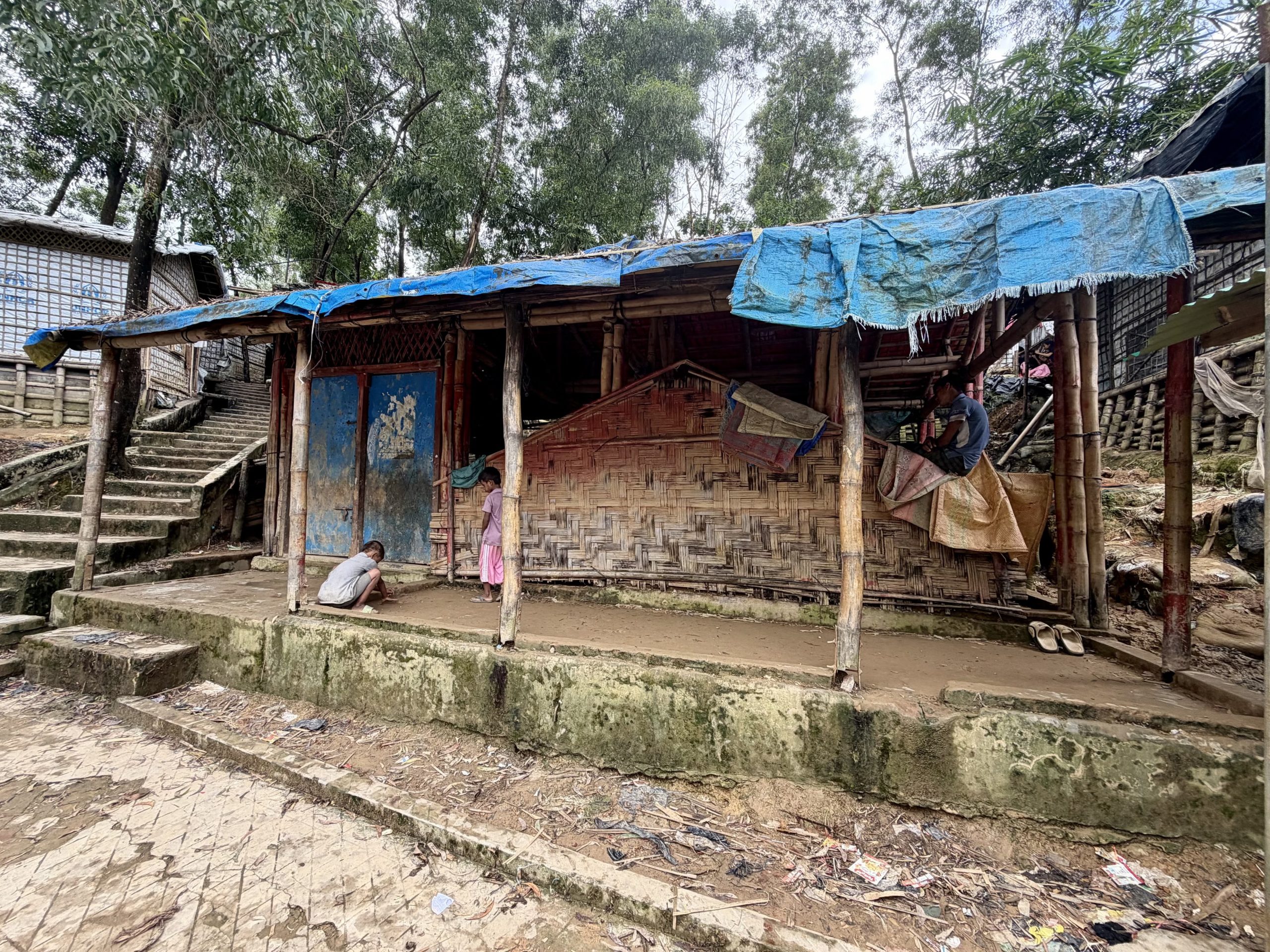
Education programs serving Rohingya refugee children in Bangladesh are facing renewed closures due to a severe collapse in international donor funding, Human Rights Watch (HRW) warned on Monday—urging donor governments to restore critical aid while calling on Dhaka and U.N. agencies to officially recognize and support an existing network of Rohingya-led community schools.
The warning arrives ahead of the International Court of Justice (ICJ) landmark ruling on Nov. 19 in The Gambia’s genocide case against Myanmar over the military’s 2017 “clearance operations” against the Rohingya in northern Arakan State.
U.N.-coordinated humanitarian education programs currently enroll 312,000 of the approximately 500,000 school-age Rohingya children living in the refugee camps in Cox’s Bazar, Bangladesh.
Donor funding shortfalls—precipitated after the United States, which previously funded half of the Rohingya education budget, halted its contributions in 2025—have left learning centers severely under-resourced and at risk of shutting down again, even as population growth and new arrivals fleeing ongoing atrocities in Myanmar have added roughly 90,000 more school-age children this year.
“Governments have turned their backs on education for half a million Rohingya students stuck in the world’s largest refugee camp, but so much could be done to mitigate this crisis. Bangladesh should accelerate steps to end bans on education for refugees, and humanitarian agencies should work with the Rohingya-led schools,” stated Bill Van Esveld, an Associate Children’s Rights Director at Human Rights Watch, in the Nov. 16 press release.
Humanitarian agencies received only $29 million out of their $72 million USD education budget request in 2025, forcing learning centers to close for months, triggering teacher layoffs, and canceling early childhood programs.
Inside UNICEF-supported learning centers, teachers operate double daily shifts without desks, benches, whiteboards, or basic stationery, with up to three students forced to share a single set of textbooks and mudslide-damaged classrooms left unrepaired.
While donor-funded centers struggle, international agencies have largely overlooked a parallel grassroots network established by Rohingya educators.
Formed in 2025 following a year of volunteer outreach, the Examination Board of Rohingya Refugees now encompasses more than 125 community-led schools teaching up to 30,000 students using standardized exams based on the Myanmar curriculum.
Because these schools lack legal recognition, they cannot receive direct foreign funding, must rely on donated refugee shelters as makeshift classrooms, and are forced to charge small student fees that restrict access for poorer families.
Bangladesh’s government has taken encouraging steps away from the restrictive policies of the former administration, which was ousted in 2024 after demolishing Rohingya community schools and threatening teachers with relocation to the remote island of Bhasan Char.
In October, Dhaka allowed several dozen Rohingya primary pupils to sit for an internationally recognized primary exam supported by the U.N. High Commissioner for Refugees (UNHCR) for the first time, and approved plans to build a 240-student primary school offering a 10-subject curriculum.
Still, Bangladesh has yet to accredit any curriculum for Rohingya students, denying them official certification or pathways to higher education.
“We are spending money to ensure education quality, as if we were a government, but we are not a government, we are simply refugees,” one community school teacher told HRW, echoing calls from camp educators for formal legal status from Dhaka and technical collaboration with UNICEF.
HRW