


Guest contributor
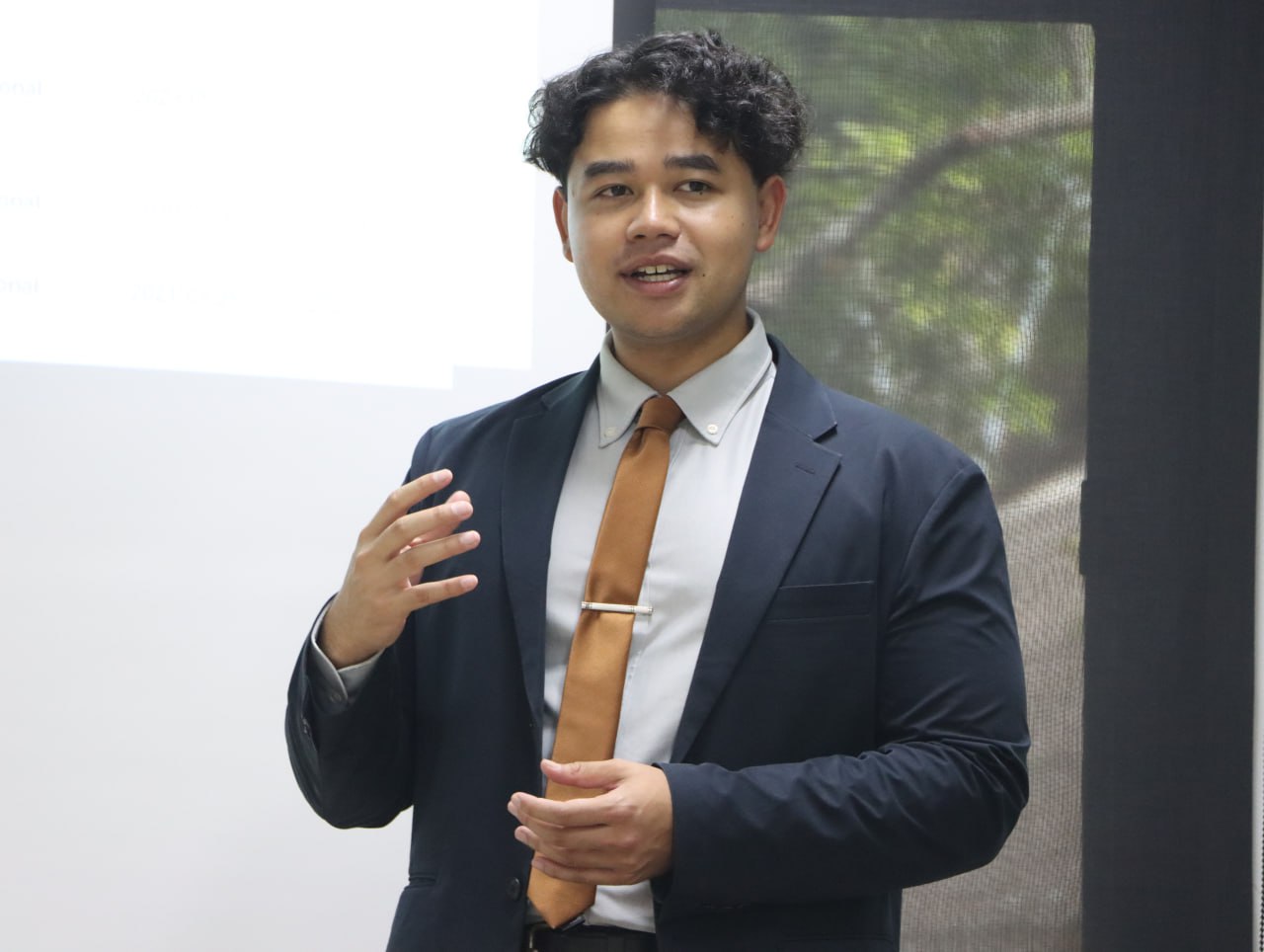
Napas Thein
For decades, pro-democracy actors in Myanmar appealed to the international community through the language of liberal internationalism: human rights, multilateralism, Responsibility to Protect (R2P), democracy promotion, and the rules-based international order.
However, the rules of the global world order are changing and democratic actors need to reassess their strategies. They need to focus on key issues that they can build pragmatic coalitions around, oftentimes with unlikely partners.
Failing to do so will just mean giving up ground in the international community to the junta.
U.S. President Donald Trump’s return to the White House accelerated divisions in the global order away from liberal internationalism and towards transactional and competitive geopolitics.
The abandonment of multilateralism and weakened international institutions has pushed middle powers such as Canada, Australia, Japan, and the United Kingdom to rethink their foreign policy objectives.
For example, earlier this year when Canadian Prime Minister Mark Carney described this geopolitical rupture in his famous speech at Davos. He argued that traditional multilateral institutions have struggled to respond effectively to modern crises, and he instead called for a new framework of international engagement which scholars call “variable geometry.”
To the uninitiated, the concept of variable geometry in foreign policy lies somewhere between traditional multilateralism (state powers engaged through the U.N. and The Hague) and pure bilateralism (direct country-to-country engagement).
Instead of relying on universal consensus through international institutions, countries form flexible, issue-specific coalitions that involve relevant actors. These coalitions shift depending on the issue at hand, whether it be security, trade, migration, humanitarian assistance, technology, or regional stability.
People in Myanmar already understand this way of engagement. Myanmar’s conflict landscape has long operated through overlapping networks of states, internal alliances, ethnic resistance organizations, civil society groups, humanitarian actors, diaspora networks, and informal diplomatic channels.
It can be argued that the resistance has been so resilient because groups have been willing to cooperate and pivot amidst disagreement. But, as we’ve recently seen, countries like Canada are increasingly adopting a more pragmatic trade-based posture, abandoning idealistic foreign policies of the past.
For example, this year alone, Canada has cautiously re-engaged with countries such as China and India to normalize trade relations, despite severe diplomatic tensions in recent years.
Canada is also pursuing deeper economic ties across Southeast Asia while strengthening security and democratic partnerships elsewhere. Similar trade-focused approaches over the past decade are visible in Australia, Japan, and the U.K.
This does not necessarily mean that Canada and its like-minded middle-power allies are abandoning democratic values altogether to focus on trade.
Groups of countries and actors can still collaborate on the international stage to address key issues. Case study: Ukraine and its “coalition of the willing”.
The international response to Russia’s 2022 invasion of Ukraine has increasingly relied not on universal consensus through the U.N., but through this evolving coalition of the willing (through overlapping arrangements involving NATO members, European states and friendly states, private industry, and non-state actors coordinating military, economic, intelligence, and humanitarian aid in support of Ukraine against Russian aggression).
The variable geometry-style shape of the response to Ukraine is unlikely in the Myanmar context, even among members of the Association of Southeast Asian Nations (ASEAN) and Myanmar’s immediate neighbours. Simply put, Myanmar does not reach the level of political prioritization that Western nations face.
With that said, how can we shift towards making values work in practice?
Myanmar’s democratic movement, and in particular the newly formed Steering Council for the Emergence of a Federal Democratic Union (SCEF), should adapt accordingly by thinking strategically on an issue-by-issue basis with key stakeholders.
Instead of viewing diplomacy solely through traditional multilateral and bilateral channels, pro-democracy actors should pursue targeted issue-based coalitions with both traditional allies and unlikely partners.
Below are some key and early ways they can do this:
Humanitarian coalition engagement — Canada, Australia, Japan, the U.K., the E.U., ASEAN, India, Bangladesh, and China
The collapse of USAID and the reduction in international humanitarian funding have created major gaps across the region. Thailand and Bangladesh continue to absorb refugee pressures while local aid networks inside Myanmar and along borderlands face constraints.
In this environment, flexible coalitions involving middle powers, ASEAN actors, China, India, Bangladesh, ethnic resistance organizations, and local humanitarian groups may prove more effective than rigid multilateral frameworks that remain constrained by Naypyidaw.
Importantly, much of Myanmar’s humanitarian need exists outside military-controlled territory, including through the ASEAN Humanitarian Assistance (AHA Center) program and beyond.
Minilateral diplomacy and Track 1, 1.5, and 2 dialogues — Canada, Australia, the E.U., and ASEAN member states
These dialogues are often dismissed as symbolic exercises or report-generating forums. In reality, they have become important incubators for policy experimentation, conflict management ideas, humanitarian coordination, and regional early-warning systems.
Discussions surrounding cyber scam centres, human trafficking, rare earth supply chains, and cross-border instability increasingly demonstrate that Myanmar’s crisis is no longer confined within its borders.
The Rohingya crisis — Canada, Australia, the U.K., the E.U., Japan, ASEAN, China, the Organization of Islamic Cooperation (OIC), and Bangladesh
Bangladesh cannot sustainably shoulder the burden alone. Former interim Bangladesh leader Muhammad Yunus has openly warned that reductions in international aid threaten the long-term viability of refugee support operations.
Even China, historically cautious on the issue, has delivered some humanitarian support to the Rohingya.
This creates openings for broader burden-sharing coalitions involving ASEAN states, states in the OIC, Japan, Canada, Australia, China, and international humanitarian actors, with the Rohingya included in Myanmar’s political dialogue.
Release of Aung San Suu Kyi — Canada, Australia, the U.K., the U.S., Japan, ASEAN, China
For many in the West, cooperation with China on Myanmar remains politically uncomfortable. Yet Beijing possesses far greater leverage over Myanmar’s junta than any Western government.
China has historically maintained a warmer relationship with Aung San Suu Kyi than many outside observers recognize, often referring to her as an “old friend.”
Securing her release is symbolically and functionally important for creating conditions for eventual political transition. No real free and fair election can take place with her, or any political leaders, still detained or obstructed.
But getting there may require thinking less in ideological terms and more in strategic ones, particularly by working with China.
Be cautious around topics of great power rivalry
Many would like to see outright policy on cyber scam centres, illicit crime, and rare earths to make the list of key objectives to generate coalitions around. These issue areas, however, pose significantly greater risk because they have become centres of great-power interest between China and the U.S.
Democratic actors in Myanmar must be strategic and cautious, refraining from reigning in great power competition unless absolutely necessary.
The junta is already playing the game
The junta is already trying to play on the new chessboard.
In the West, the junta has actively pursued targeted lobbying in Washington to ease sanctions and expand economic opportunities. It has sought transactional, small gains where possible, including through outreach linked to agriculture, trade, and geopolitical positioning.
They even hired former Trump political advisor Roger Stone to help advance their normalization strategy.
In the East, the junta met with officials in India to discuss engagements on maritime and naval security in the Bay of Bengal and along the India-Myanmar border, where airstrikes have targeted resistance actors in Chin State.
Following his trip to India to meet with Prime Minister Narendra Modi, junta leader Min Aung Hlaing concluded a five-day trip to China, where he met with President Xi Jinping.
This campaign of normalization is likely to continue with ASEAN, and other nations in the East and the West.
If pro-democracy actors refuse to adapt strategically to the emerging global order, others will shape it without them.
Engaging in the new paradigm of variable geometry does not play by the former rules of multilateralism. It instead requires actors like the SCEF to engage sequentially, pragmatically, and sometimes alongside unlikely partners.
This approach carries risks. Flexible coalitions can dilute accountability, empower transactional diplomacy, and sideline universal democratic norms. It can reek of a cynical approach to realpolitik.
But in a fractured international system where universal consensus is increasingly unattainable, flexible and pragmatic issue-based coalitions may offer Myanmar’s democratic movement its best chance toward a federal democratic future.
Napas Thein is a fellow at the MyPACK Hub, based at the University of Toronto’s Asian Institute and Munk School of Global Affairs and Public Policy.
DVB publishes a diversity of opinions that do not reflect DVB’s editorial policy. We’d like to hear what you think about this or any of our stories: [email protected]