
Thursday, July 23, 2026
Home Blog Page 2

Scam centres growing ‘exponentially’ despite Myanmar crackdown

0
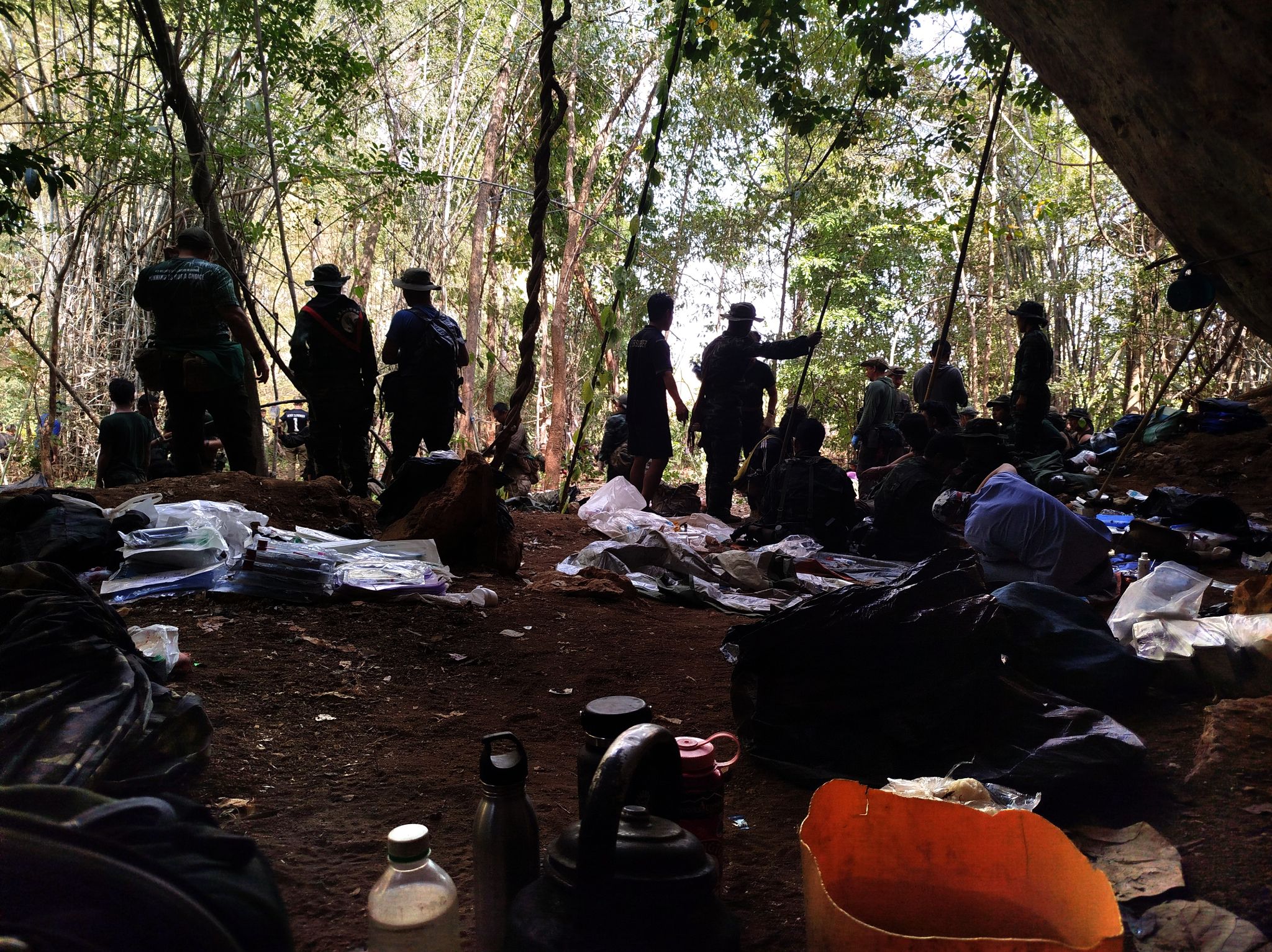
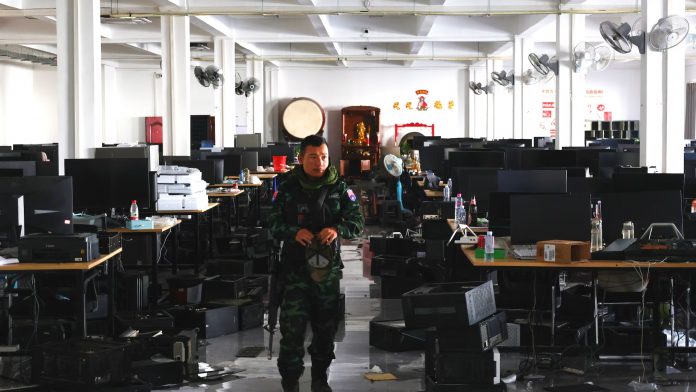
Karen National Liberation Army soldiers walk though Shunda Park. (Supplied: Free Burma Rangers)

The scam industry in Myanmar is morphing and heading into the jungle, according to satellite imagery, victim testimony and local investigators.

By Libby Hogan, Jarrod Fankhauser and Julian Fell for ABC

Deep in Myanmar’s borderlands, pro-democracy fighters from an ethnic Karen armed group made an unexpected discovery after retaking territory held by a militia.

The Karen National Liberation Army entered a large apartment complex behind jungle and razor wire fences.

Inside, they found one of the country’s largest online scamming operations.

About 3,000 people were working in the compound.

“When we started to hear their stories, I realised just how plain evil the treatment of workers was in there,” said Cameron, a pseudonym used for security reasons as he continues working inside Myanmar.

He works for the Free Burma Rangers, a humanitarian organisation that provided medical assistance for the newly freed victims.

“Some were out in the cold, all freezing and vulnerable near the river.”

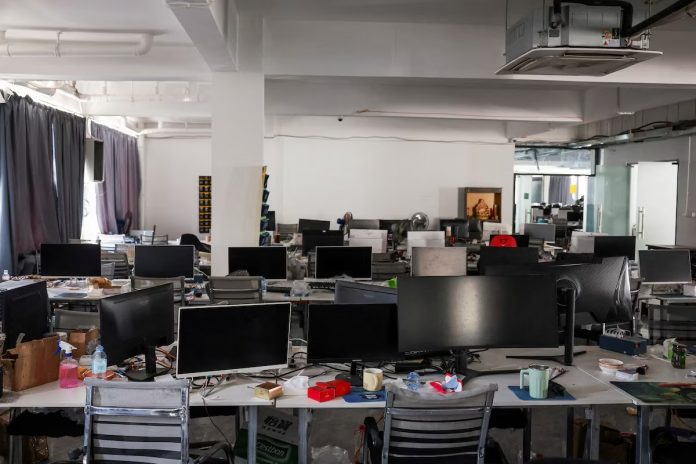
The compound, known as Shunda Park, was a hub of industrial-scale cyber fraud.

“When we didn’t hit the targets of scamming enough people, we were hung by chains and kept in dark rooms,” recalled Ivan, a Malaysian man who was trafficked through Thailand to Myanmar and freed during the operation.

Other workers described similar experiences to Ivan: held in dark rooms for days with little food or water for punishment.

Photos were shared with the ABC showing bruises and other injuries that had been inflicted.

During the discovery, troops recovered thousands of phones, SIM cards and hard drives, alongside training manuals that instructed workers how to run romance scams.

The capture of Shunda Park offered a rare glimpse inside an industry that has flourished in the chaos of Myanmar’s civil war.

Since the military seized power in a 2021 coup, scam compounds have proliferated across the country’s lawless border regions, generating millions of dollars while exploiting trafficked workers from around the world.

The ABC heard from two people, Ivan from Malaysia and a man from Taiwan, who were trafficked into compounds in the mountains of Myanmar’s Karen State.

They asked to remain anonymous for fear of their safety or being targeted online.

Scam industry growing in Myanmar, despite crackdowns

Thailand and the Myanmar military have publicised their dismantling of scam centres, including two sprawling compounds that were far larger than Shunda Park.

Shwe Kokko and KK Park, two notorious operations, held thousands of workers when they were raided last year.

Up to 25,000 scammers worked in KK Park alone before it was spectacularly bombed.

Thai anti-trafficking officials warned the true number of people held in the compound could have been higher.

But investigators say the industry is decentralising rather than shutting down.

“The problem isn’t disappearing, it’s morphing,” said Jason Tower, a senior analyst with the Global Initiative Against Transnational Organized Crime.

Free Burma Rangers confirmed a similar pattern on the ground.

“We saw multiple probable scam compounds under construction on the way to Shunda Park,” Cameron said.

Nathan Ruser, an Australian Strategic Policy Institute analyst who monitors the compounds through satellite imagery, said new facilities were visibly under construction even as authorities talked of crackdowns elsewhere.

“The growth of these centres is [following] an exponential curve,” he said.

Many of the newer compounds look like apartments.

They’re springing up along the border with Thailand; many are within minutes’ drive of each other.

Tower said there was evidence of a new model built to evade detection.

“Scamming 2.0 is effectively compounds no longer within view from the Thai border, but operating deeper inside Myanmar,” he told the ABC.

Satellite imagery suggests that one of the newer compounds, called Tai Chang, sprang up in 2024.

Human rights groups have received calls for help from victims inside Tai Chang that confirm tactics far more brutal than previous compounds are being used to pressure workers.

“They are further away so they’re heavily reliant on trafficking victims,” said Ruser, referring to the lack of workers living nearby the compounds.

“There’s a lot more torture … a lot less medical care.

“There’s less infrastructure [in the smaller locations]”, he said, pointing to compounds popping up along the Moei [Thaungyin] River in southern Myanmar, further away from the border crossing between Thailand and Myanmar.

What’s more, investigators say the large compounds such as KK Park have undergone what anti-trafficking expert Mechelle Moore from Global Alms Inc. described as “performative demolition”.

Buildings visible from main roads appear damaged or abandoned, while many operations continue or shift elsewhere.
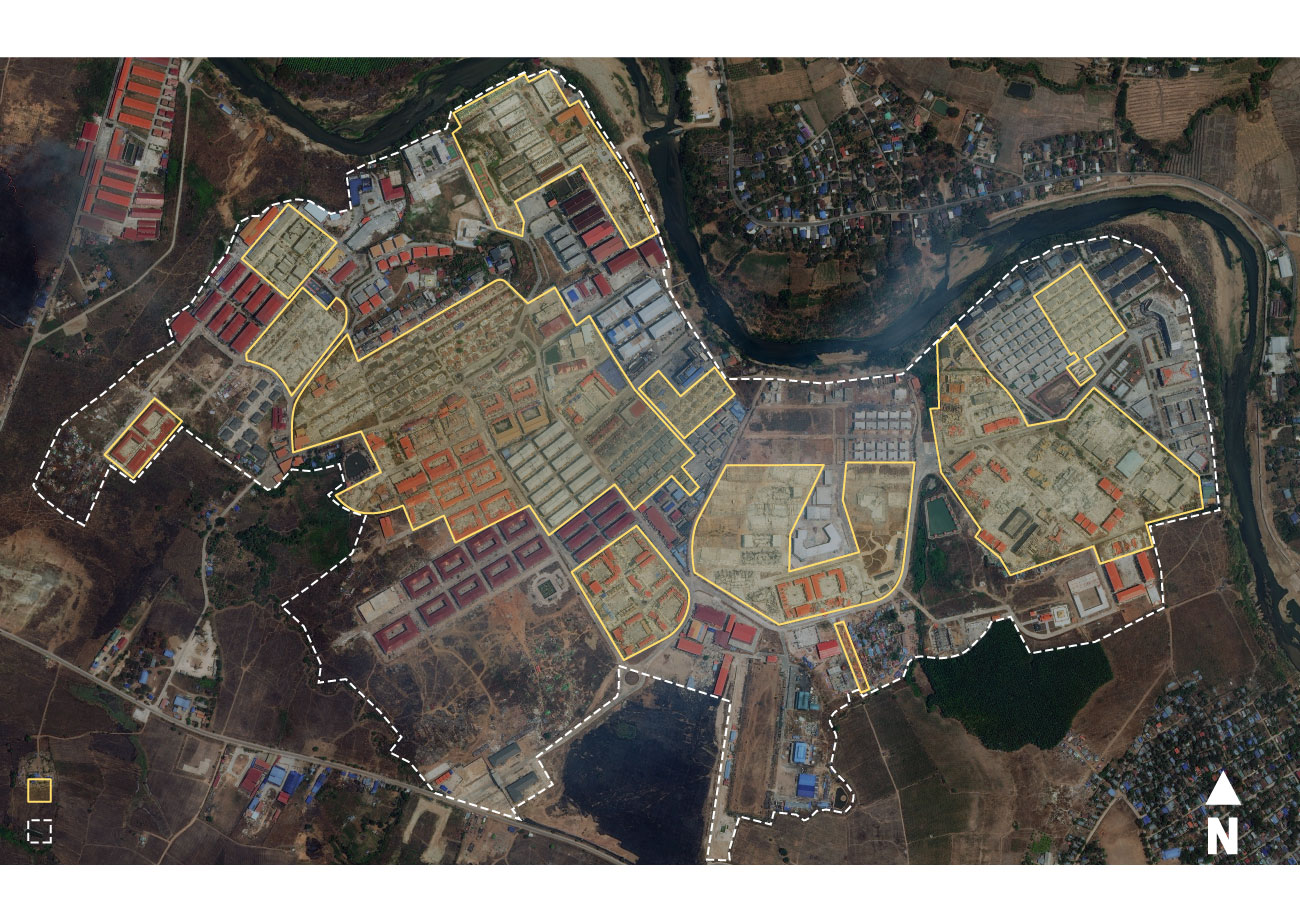
Destroyed buildings in KK Park scam compound. (Credit @2026 Vantor)

“The crime syndicates were given a heads-up … they left early before the raids started,” said an anti-trafficking investigator who tracks scam compounds along the border.

“We actually confirmed KK Park and others around it are still very much standing and operational,” she said.

Up and down the Thai border, scam centres continue to operate. To the south, they are spreading into more rural areas.

When one compound was shut down, said Ruser, another was likely to spring up elsewhere.

“Scam centres require only a small footprint: a rented hotel, computers, electricity, an internet connection and permissive local law enforcement.

“That makes it almost impossible to stamp out comprehensively across the region.”

Who are the scammers?

Many of the people carrying out the scams are themselves victims.

Lin, a Taiwanese man, said he was lured to Bangkok with the promise of a translation job before being trafficked across the border into Myanmar.

Scammers were told to conduct “pig butchering”, which involves building fake online profiles and cultivating relationships before persuading people to hand over large sums, often through cryptocurrency.

Freed victims said they were primarily targeting Americans on social media, but they also went after Australians.

“I was targeting Australian women,” a liberated Ethiopian man later told a British news agency.

He added, “Mostly the good clients are the older women because they are desperate for love.”

When Lin attempted to contact Taiwanese police and email his location in a plea for help, he said he was brutally punished.

“I was confined to a cage and forced to stand handcuffed in the sun for hours each day,” Lin wrote in an email to several NGOs asking for help.

He shared photographs showing bruises across his body and said repeated beatings left him with suspected fractured ribs.

“I could hear my bones grinding together when I walked and breathed,” he said.

Inside Shunda Park, success and failure were mapped into the building itself.

Workers who generated high revenue were housed on the upper floors, says Cameron of Free Burma Rangers.

On lower levels, those who failed were put in punishment rooms: isolation boxes with wi-fi access, where detainees could earn their release by resuming online scam work.
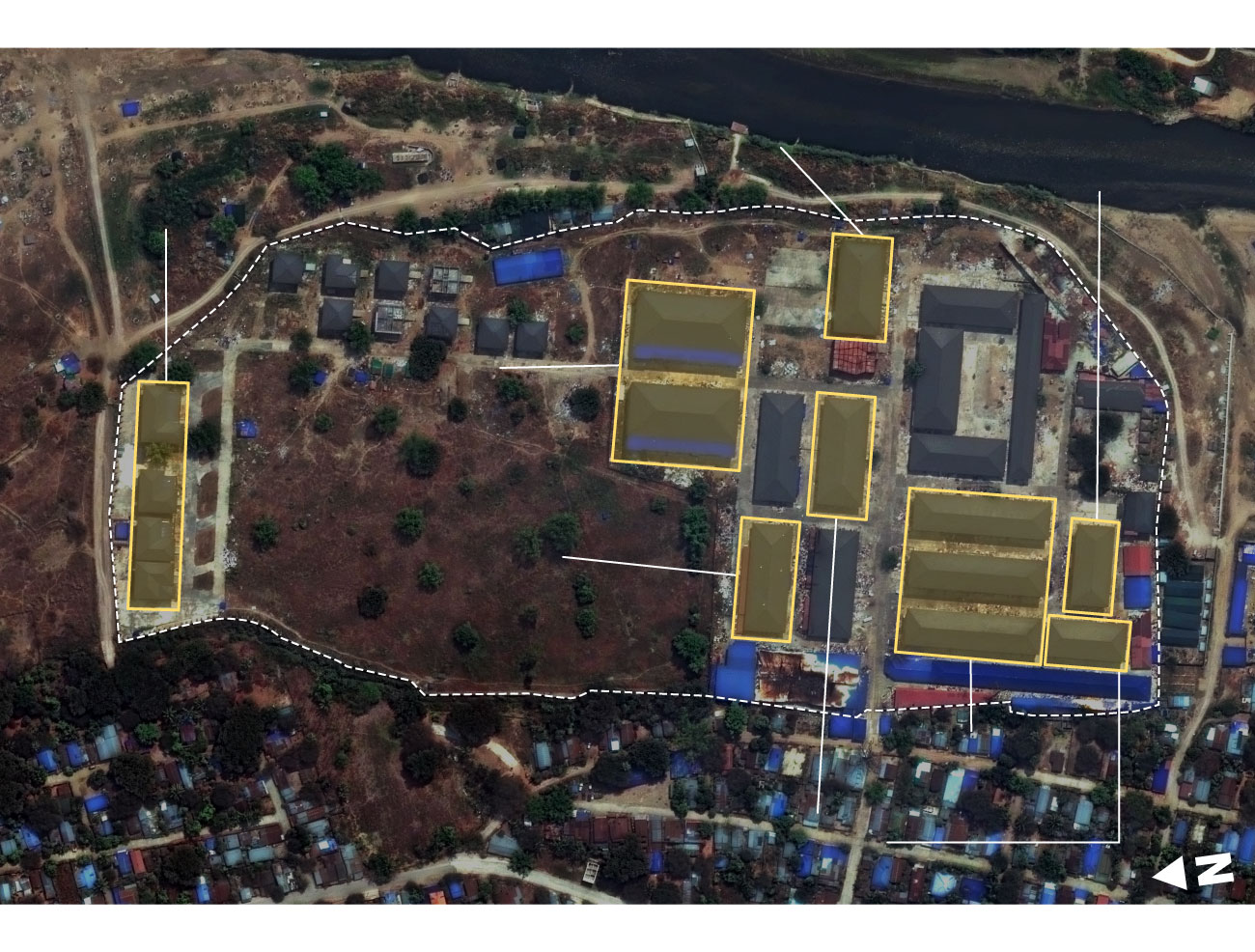
Identified buildings in Shunda Park scam compound. (Credit: Free Burma Rangers)

The disparity was visible throughout the compound.

There were recreational facilities, including a karaoke bar for the Chinese bosses to enjoy.

According to Ivan, who was interned at Shunda Park, guards carried rubber-coated batons designed to inflict intense pain without leaving obvious injuries or breaking the skin.

Ivan said he often wrote down false phone numbers when bosses asked for progress reports.

At least 120,000 people are thought to be trapped in scam compounds in Myanmar, according to estimates by the U.N. Office on Drugs and Crime.

Shutting down the scamming industry

Scam compounds have flourished along the border since the Myanmar military coup five years ago, where militia-controlled territory has enabled the abduction and movement of workers across the region.

The region has long attracted criminal networks due to its cross-border supply access for fuel and established illicit infrastructure of the first scam compounds in Myanmar.

As international sanctions and isolation have squeezed Myanmar’s military rulers, experts say the junta and its allies have become increasingly reliant on revenue from scamming.

Many scam centres operate under the protection of local militias, or groups aligned with the Myanmar military, which the U.N. has repeatedly accused of committing widespread atrocities and war crimes against its own citizens.

The capture of Shunda Park demonstrated scam compounds were not beyond reach.

It also provided intelligence that was shared with international partners.

The FBI sent personnel to work alongside Thai authorities examining thousands of mobile phones and hard drives recovered from the compound and interviewing former workers.

Investigators identified the Chinese operators behind the site and helped build a case against the two alleged ringleaders.

One, Huang Xingshan, allegedly served as a manager and enforcer who personally participated in the punishment of trafficked workers.

The other, Jiang Wen Jie, allegedly supervised teams targeting American victims.
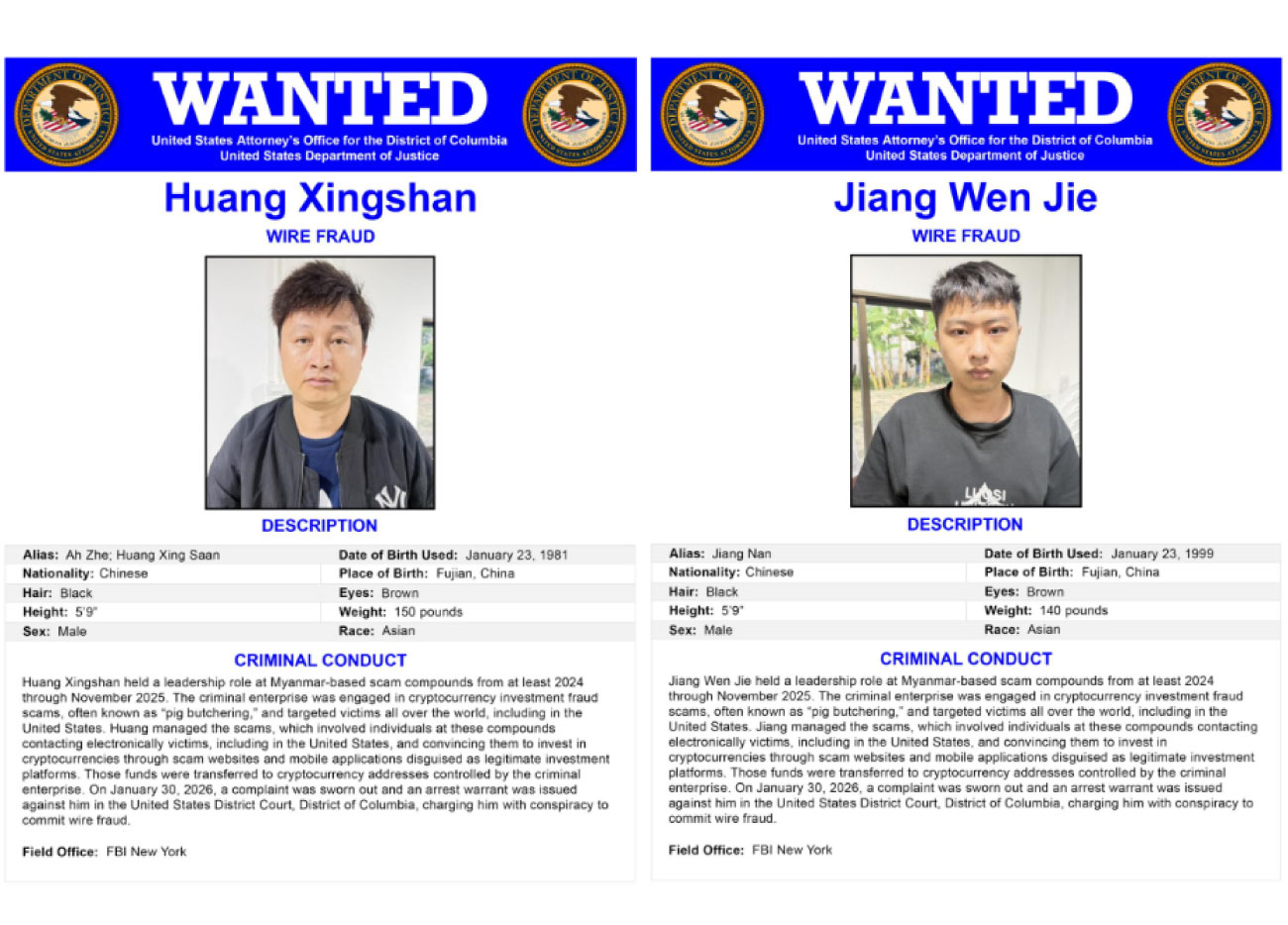
Two suspected Chinese scammers facing prosecution. (Credit: US Department of Justice)

Prosecutors say one worker under his command defrauded a single victim of more than $3 million USD ($4.35 million AUD) through a fake investment platform.

Both men were later arrested in Thailand while allegedly attempting to travel from Cambodia back into Myanmar.

The ABC sought comment from Thai authorities but did not receive a response.

The Myanmar military was unable to be contacted.

Shunda embedded in sprawling criminal ecosystem

Funds stolen by criminal groups based in Southeast Asia likely exceed $43.8 billion USD ($63.5 billion AUD) a year, nearly 40 per cent of the combined formal GDP of Laos, Cambodia and Myanmar, according to the U.S. Institute of Peace.

The raid on Shunda Park also challenged assumptions about who was willing and able to confront the scam economy.

Some experts argue the Karen National Union (KNU), the political arm of the resistance group fighting Myanmar’s military in Karen State, is one of few actors with both the political will and local knowledge to disrupt scam operations.

Other armed groups, militias and the Myanmar military have become financially dependent on the illicit economy surrounding online fraud.

Shunda Park, Tai Chang and a growing number of new scam compounds are in territory occupied by the Myanmar junta-aligned militia known as the Democratic Karen Benevolent Army (DKBA).

“I have been saying this for many years: we need someone on the ground to work with,” Tower said.

“The KNU are really the only group in that area with the political will to do something about these issues.

“If we don’t find an actor on the ground interested in the Karen people, and interested in responsible governance on the ground and really get in there, then we aren’t going to have tools to stop these scams,” Tower added.

Thailand has periodically cut electricity, internet and fuel supplies to border compounds, temporarily disrupting operations.

But investigators say scam operators have adapted and are increasingly relying on satellite internet services such as Starlink.

Tower describes the emergence of “scam centres 3.0”: mobile operations concealed in jungle territory across the country, far from border towns and difficult to monitor.

Unlike the vast complexes that came to symbolise Southeast Asia’s scam industry, these new sites can be rapidly assembled using temporary structures, portable perimeter walls, generators and satellite internet, then dismantled just as quickly if authorities close in.

“It’s almost like a humanitarian field operation,” Tower said, “except it’s built for scamming.”

If pressure mounts in one area, operators can simply relocate.

The KNU has called for international cooperation for eradicating scam compounds.

But with civil war continuing, and no functioning national government capable of asserting control, the risk remains high for anyone trying to clamp down on the compounds.

Artillery and drone strikes continue nearby the compounds.

Experts believe the Myanmar military is determined to retake areas seized by resistance groups.

Not only because of its strategic value, but because the compounds themselves have become woven into the wartime economy.

For the thousands trafficked into them each year, the distinction matters little.

About the data

  • Scam compounds identified by ASPI’s Nathan Ruser, using Sentinel-2 Satellite imagery from 2020 to 2026 (taken in April and May each year).
  • For each of the compounds, the built-up area was mapped, defined by areas where individual buildings could be discerned from the 10m-resolution satellite imagery.
  • Suspected construction areas in 2026 were mapped separately, where there has been evidence of construction either around existing facilities or entirely new areas under construction but not advanced enough to determine whether they are certainly scam centres or potentially something else.

Credits

  • Reporting: Libby Hogan
  • Graphics: Jarrod Fankhauser
  • Digital production: Julian Fell
  • Editing: Ian Burrows and Cristen Tilley

ABC
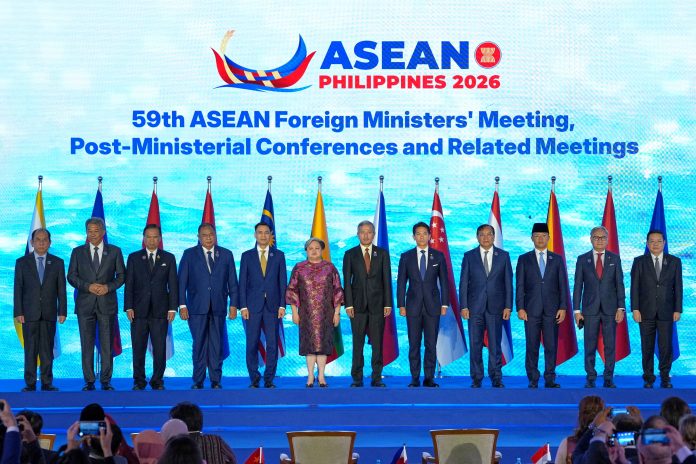
ASEAN foreign ministers in Philippines to discuss Myanmar; Campaign to retain UN Ambassador Kyaw Moe Tun

0
Myanmar regime Permanent Secretary of the Ministry of Foreign Affairs Hau Khan Sum, Malaysian Minister of Foreign Affairs Mohamad Hasan, Thailand's Vice Minister for Foreign Affairs Vijavat Isarabhakdi, East Timor's Foreign Minister Bendito dos Santos Freitas, Vietnam's Deputy Minister of Foreign Affairs Dang Hoang Giang, Philippine Foreign Secretary Theresa Lazaro, Singapore's Foreign Minister Vivian Balakrishnan, Brunei's Foreign Minister Prince Abdul Mateen Bolkiah, Cambodia's Foreign Minister Prak Sokhonn, Indonesia's Foreign Minister Sugiono, Laos Foreign Minister Thongsavanh Phomvihane, and ASEAN Secretary-General Kao Kim Hourn during the opening ceremony of the ASEAN Foreign Ministers' Meeting in Manila, Philippines, on July 21. (Credit: Reuters)

ASEAN foreign ministers in Philippines to discuss Myanmar

Foreign ministers from the 11-member ​Association of Southeast Asian Nations (ASEAN) and their major partners are gathering ⁠in Manila, Philippines, this week against a backdrop of instability beyond the region since the ​U.S. and Iran resumed open conflict, raising concerns about the flow of energy supplies ​through the Strait of Hormuz, as well as inflation and global growth.

The Middle East crisis will feature prominently in discussions between ASEAN diplomats but there will be an informal consultation on the crisis in Burma since the Feb. 1, 2021 military coup by foreign ministers today held in Manila, according to Philippines’ spokesperson Dominic Xavier Imperial. The Philippines is the 2026 chair of ASEAN and host of the meetings. 

The Five Point Consensus, which is the regional bloc’s peace plan for Burma was agreed to by regime leader Min Aung Hlaing in April 2021 but not implemented upon his return to Burma. ASEAN has banned senior regime officials from attending its top-level meetings ever since, but held an “informal” meeting with regime Foreign Minister Tin Maung Swe on July 12Read more on our website

Campaign to retain UN Ambassador Kyaw Moe Tun

Members of the diaspora from Burma in the United States, alongside pro-democracy networks across Europe, Australia, and Asia, convened online on Saturday to coordinate a global campaign advocating for Ambassador Kyaw Moe Tun to retain his seat as Burma’s Permanent Representative to the United Nations.

The campaign comes ahead of the 81st session of the U.N. General Assembly (UNGA), scheduled for September 8–22, where the nine-member U.N. Credentials Committee will decide whether Kyaw Moe Tun will maintain his post or be replaced by an appointee from the regime in Naypyidaw, which seized power during the 2021 coup.

Kyaw Moe Tun was appointed as Permanent Representative in October 2020 under Aung San Suu Kyi’s elected National League for Democracy (NLD) government—months before it was ousted during the coup. Since then, he has served as a primary diplomatic lifeline for the democratic resistance at the U.N. Read more on our website

The Free Burma Rangers provide humanitarian assistance to injured resistance members in Hpasawng Township, Karenni State, on Jan. 23, 2024. (Credit: CJ)

Fortify Rights trains resistance on war crimes investigations

International human rights organization Fortify Rights has called on Burma’s resistance forces to establish independent war crimes mechanisms and units to investigate alleged human rights violations committed by both sides, including its own, in the country’s conflict since the armed uprising to the 2021 coup began.

“We are committed to ensuring all parties to armed conflicts understand their obligations under the laws of war,” said Peter Bouckaert, the senior director of Fortify Rights, in a press release on July 15. “We observed a serious commitment among participants in Karenni State to understanding and applying these standards.”

This call follows a series of trainings for members of the Karenni Nationalities Defense Force (KNDF), Karenni Army (KA), and Karenni People’s Liberation Army (KPLA), in November 2025 and March 2026 set up by the Interim Executive Council (IEC), established in 2023 as the provisional government of Karenni State. Read more on our website

News by Region

ARAKAN—Internet service providers in 14 townships, which were seized by the Arakan Army (AA), told DVB that their Starlink terminals went offline in June. A resident in Mrauk-U Township told DVB that he has lost 10 million MMK ($2,300 USD) after investing in an internet cafe using Starlink.

A coalition of 255 civil society organizations stated on July 17 that recent cuts to Starlink have affected over 13 million people inside Burma. The regime has imposed a sweeping telecommunication blackout across Arakan to cut access to information in areas not currently under its control. 

NAYPYIDAW—The regime extended a state of emergency in 58 townships for 90 days while lifting it in Chin State’s Falam and Tonzang townships. A state of emergency was declared on April 23 across 60 townships—transferring civilian administrative and judicial powers to the military

During a parliamentary session on July 21, five pro-military lawmakers elected during the regime’s 2025-26 polls said that peace and security had “returned to normal” in Falam and Tonzang, agreeing to lift the state of emergency since regime forces regained control of the towns in April and May

TANINTHARYI—The bodies of four civilians, including three members of a humanitarian aid group and one who remains unidentified, were recovered in Dawei Township’s Akani village on Tuesday, according to a local non-profit. It added that the three aid workers were Dawei residents. 

The four were killed during a regime counteroffensive on the village, according to Dawei residents. The bodies were discovered after 4-5 days and were decomposed, according to the MAGGA Initiative. The four were allegedly arrested near the Dawei Special Economic Zone (SEZ) on July 7. 

(Exchange rate: $1 USD = 4,320 MMK) 

International criminal groups use technology to expand in and beyond Asia, UN report says

0
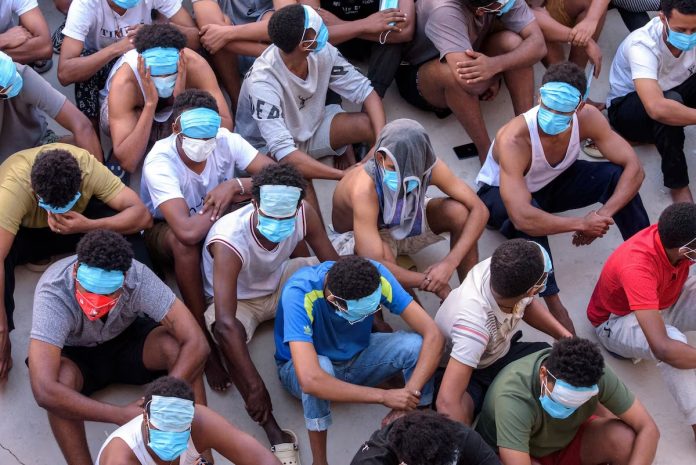
Human trafficking victims at cyber scam centers in Myanmar inside the notorious KK Park compound on the Thailand-Myanmar border after a multinational crackdown on the compound, which was operated by the Karen State Border Guard Force. (Credit: Reuters)

Southeast Asia-based criminal groups are using increasingly integrated networks and technology to build a rapidly growing illicit economy with tentacles that reach far beyond Asia, with scams alone causing estimated combined losses of $88.3 billion to $114.1 billion USD in 2025, a U.N. report says.

The report by the United Nations Office on Drugs and Crime (UNODC) outlines how transnational crime that used to be concentrated in Southeast Asia has expanded to other regions, while global criminal groups are increasingly engaging in drug, human and wildlife trafficking in Asia.

Criminals are using new technologies to launder money through global financial systems and using artificial intelligence to steal from victims worldwide, said the report, released Tuesday.

Children are increasingly at risk

One key finding of the report is the threat to children both from AI and from online gaming, as hundreds of scam compounds scattered across Southeast Asia provide venues for sex trafficking and selling of child sexual abuse content.

“There is a huge jump in AI-generated child sexual images … communicated through encrypted communications platforms,” said Inshik Sim, UNODC researcher and coordinator for the report, told reporters at a briefing at the Foreign Correspondents Club of Thailand (FCCT).

East Asian crime syndicates are running businesses that use malware, generative AI and deepfakes for sexual extortion and exploitation in a trend that increases risks of in-person abuse as well as livestreamed abuse and grooming of victims.

Apart from outright trafficking for the sex industry, victims can be sold into domestic servitude, forced begging and forced labor, among other forms of exploitation, the report says.

Social media and online gaming and gambling also pose dangers for children, the report notes, citing surveys showing that hundreds of children and teens across Southeast Asia are engaged in online gambling, some to the extent of addiction.

Trafficking in drugs, guns tobacco and wildlife is expanding

The report estimates the combined annual sales of illicit drugs in Southeast Asia and nearby countries at up to $109 billion USD, with seizures of illegal shipments soaring. That includes methamphetamines, heroin and ketamine.

It points to the Sulu-Celebes maritime “triangle” between Indonesia, Malaysia and the Philippines as an increasingly important corridor for shipments of cocaine from Latin America to Asia, with illicit cargoes sometimes embedded in legitimate shipments such as Chinese tea.

The area is also often used for smuggling of wildlife and small arms, the report says.

Meanwhile, Thailand and Vietnam increasingly are the source of cannabis sent to Japan, where it is illegal, and to Europe, it says.

Earlier this year, authorities in Malaysia’s Sabah seized more than three tons of methamphetamine, ketamine and ecstasy in the largest such seizure for Sabah so far.

Money laundering and other tools keep criminals in business

The report outlines how cross border financial and technology networks are supporting what it calls a “criminal service infrastructure” that facilitates global organized crime.

The tools used include cryptocurrency, encrypted and private communications platforms and generative AI to create convincing phishing content, deploy real-time deepfake videos and voice calls.

Using AI-powered translations, they can target victims across many languages at the same time, the report says.

Satellite communications also enable scam compounds to operate in places that are remote or subject to close surveillance.

To counter this growing criminal ecosystem, authorities need a coordinated, cross-border strategy that integrates enforcement across data, communications and financial systems, and online services and marketplaces, the report said.

Crackdowns drive scam centers offshore and underground

As authorities in Thailand, China and elsewhere have raided industrial-sized scam centers mostly located in border regions of Myanmar, Laos and Cambodia, criminals have responded by shifting to other parts of the world or operating on a smaller scale.

“They were destroyed, but none of the operations stopped,” said Seong Jae Shin, an analyst and counter-terrorism office at the UNODC.

Scam centers moved to villas and other properties, he said, going underground. “It’s much harder for the Cambodian authorities to crack down now,” he said.

AP

ASEAN top diplomats meet, voice ‘serious concern’ over Middle East hostilities

0
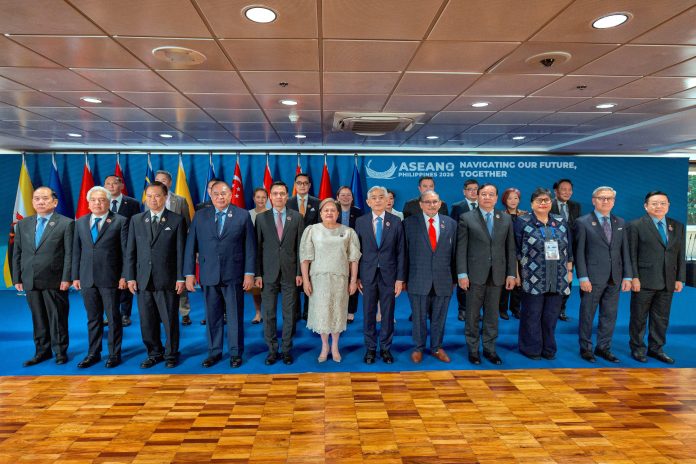
Myanmar's regime Permanent Secretary Hau Khan Sum, Malaysia Secretary-General of the Ministry of Foreign Affairs Amran Mohamed Zin, Thailand Deputy Prime Minister and Foreign Minister Sihasak Phuangketkeow, Timor-Leste Foreign Minister Bendito dos Santos Freitas, Vietnam Deputy Foreign Minister Dang Hoang Giang, Philippines Foreign Secretary Theresa Lazaro, Singapore Permanent Secretary of Foreign Affairs Albert Chua, Brunei Foreign Minister Erywan Yusof, Cambodia Deputy Prime Minister and Foreign Minister Prak Sokhonn, Indonesia Director General for ASEAN Cooperation Ina Hagniningtyas Krisnamurthi, Laos Foreign Minister Thongsavanh Phomvihane, and ASEAN Secretary-General Kao Kim Hourn pose for a photo with representatives from the ASEAN Intergovernmental Commission on Human Rights (AICHR) Representatives during the ASEAN Foreign Ministers' Meeting at the Philippine International Convention Center on July 20, 2026 in Pasay, Metro Manila, Philippines. (Credit: Reuters)

The Middle East crisis cast a shadow over a diplomatic gathering in Southeast Asia on ‌Tuesday, where foreign ministers voiced serious concern over renewed hostilities that add to uncertainty in a region grappling to manage tensions and conflicts of its own.

Foreign ministers from the 11-member Association of Southeast Asian Nations (ASEAN) and major partners have meetings in Manila this week against a backdrop of instability since the U.S. and Iran resumed open conflict, raising fears about energy supplies through the Strait of Hormuz, as well ​as inflation and global growth.

Risks have increased in recent days, with Yemen’s Iran-aligned Houthis announcing a naval blockade on Saudi Arabia, opening a potential new front in the ​conflict and raising the threat to global energy supplies and trade beyond the Gulf.

“We are deeply concerned that these developments severely undermine the ⁠ongoing efforts of key mediators and diminish the prospects for a peaceful resolution through dialogue and diplomacy,” the ministers said in a statement after a closed-door meeting.

Southeast Asia, a ​major oil importer with a combined gross domestic product of $3.8 trillion USD, is highly exposed to the supply crunch and has sought to fast-track an ASEAN oil-sharing mechanism to mitigate the impact.

ASEAN ​has no shortage of challenges closer to home and will on Tuesday hold a consultation on the conflict in Myanmar, as the bloc’s peace initiative falters, five years after a military coup that plunged the country into a civil war that has killed an estimated 100,000 people.

Rubio takes aim at Beijing

Officials are also likely to discuss tensions in the South China Sea, with ASEAN and China still trying to ​conclude a code of conduct to prevent disputes from escalating after nearly 10 years.

Tensions between Manila and Beijing have intensified ahead of an expected meeting between Philippine Foreign Affairs ​Secretary Maria Theresa Lazaro and Chinese Foreign Minister Wang Yi on the sidelines of Wednesday’s ASEAN meetings.

A fresh war of words erupted after the Philippine military accused China’s Coast Guard personnel of aggressively striking ‌one of ⁠its navy personnel on the head with a baton near the disputed Second Thomas Shoal in the South China Sea on Monday, prompting accusations of provocation and dangerous manoeuvres from both governments.

Philippine President Ferdinand Marcos Jr. will summon China’s ambassador in Manila, his office said on Tuesday, hours after Manila’s envoy in Beijing was similarly summoned.

As the diplomatic standoff deepened, the Chinese foreign ministry told a media briefing on Tuesday ASEAN was not a forum for discussing bilateral maritime disputes.

“The Philippines should earnestly fulfil its duties as ASEAN’s rotating chair, promote dialogue ​and cooperation, rather than placing its own ​political interests above regional peace and stability,” ⁠it said.

The U.S. State Department condemned what it described as China’s “dangerous and aggressive” actions, in what it called “China’s troubling pattern of provocation against lawful Philippine maritime operations”.

U.S. Secretary of State Marco Rubio and Wang will join the ASEAN-led meeting in the coming days and ​could meet on the sidelines. Also attending will be India, Japan, Australia, South Korea, Russia, Britain and the European Union, among others.

Without ​naming China, Rubio took a ⁠swipe at Beijing in an opinion piece published in Philippine newspapers on his arrival in Manila on Tuesday, reaffirming U.S. commitment to freedom of navigation, but warning such freedom was “by no means guaranteed”.

“If those waters fall under the control of a power willing to use commerce as a geopolitical weapon, both the United States and the ASEAN states would face dire new ⁠threats to their ​sovereignty, security and economic futures,” Rubio said in the piece.

Rubio reiterated a 2016 arbitral ruling that invalidated ​China’s sweeping sovereignty claims in the South China Sea was final and binding and said the U.S. would honour its obligations to the Philippines and other allies “as they confront new and coercive threats to our shared interests.”

China ​does not recognise the arbitration ruling, which went in favour of the Philippines.

REUTERS

Myanmar diaspora launches campaign to retain UN Ambassador ahead of 81st General Assembly

0
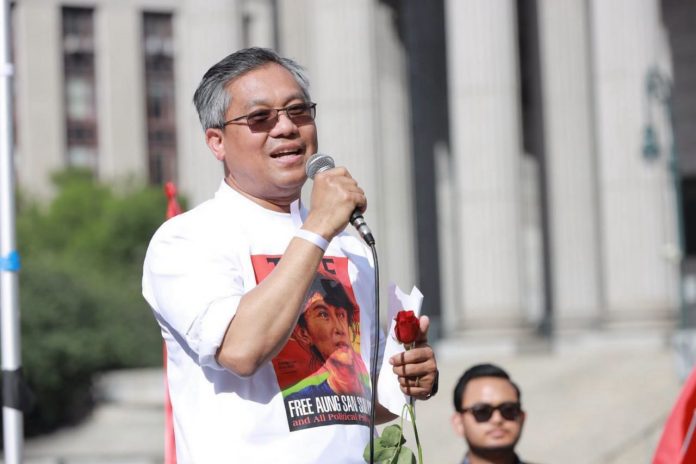
Myanmar's permanent representative to the UN, Ambassador Kyaw Moe Tun, speaks during an event commemorating the 81st birthday of jailed State Counsellor Aung San Suu Kyi in New York City on June 20. (Credit: KyawSoe Latt, Sethu Win)

Members of the Myanmar diaspora in the United States, alongside pro-democracy networks across Europe, Australia, and Asia, convened online on Saturday to coordinate a global campaign advocating for Ambassador Kyaw Moe Tun to retain his seat as Myanmar’s Permanent Representative to the United Nations.

The campaign comes ahead of the 81st session of the U.N. General Assembly (UNGA), scheduled for September 8–22, where the nine-member U.N. Credentials Committee will decide whether Kyaw Moe Tun will maintain his post or be replaced by an appointee from the military regime in Naypyidaw.

A crucial voice on the world stage

Kyaw Moe Tun was appointed as Permanent Representative in October 2020 under Aung San Suu Kyi’s elected National League for Democracy (NLD) government—months before it was ousted during the Feb. 1, 2021 military coup. Since then, he has served as a primary diplomatic lifeline for the democratic resistance at the U.N.

Moe Zaw Oo, an advisor to the National Unity Government (NUG) Ministry of Foreign Affairs, emphasized to DVB that Kyaw Moe Tun’s continued presence is “vital” to exposing the military’s ongoing atrocities.

During a U.N. General Assembly plenary debate on July 6, Kyaw Moe Tun formally appealed to the international community to invoke the Responsibility to Protect (R2P) doctrine, urging direct intervention to halt what he described as a “systemic campaign of mass atrocities and war crimes” waged by the military.

Myanmar Conflict Snapshot (Post-2021 Coup)
├── Conflict-Related Fatalities: 100,114 (Recorded by ACLED)
├── Main Diplomatic Goal: Retain Kyaw Moe Tun as Permanent Representative at the U.N.
└── Key Action Date: September 19, 2026 (Global Day of Action outside U.N. HQ)

September push: The ‘Day of Action’ in New York

The global diaspora strategy will culminate on Sept. 19 designated as the primary “Day of Action.” Activists plan a major demonstration outside U.N. headquarters in New York City to demand that the Credentials Committee honor the democratic mandate of the Myanmar people.

Simultaneous support rallies and public advocacy events are scheduled throughout September across European, Australian, and Asian capitals. Beyond supporting Kyaw Moe Tun, the campaign intends to pressure international bodies—particularly the Association of Southeast Asian Nations (ASEAN)—to stop normalizing relations with Naypyidaw.

“The campaign will also call on ASEAN not to legitimize the regime in Naypyidaw… by engaging with them through meetings,” said Khin Thiri Nandar Soe, a U.S.-based pro-democracy activist.

Geopolitical tensions and the credentials committee

The U.N. Credentials Committee—which reviews member states’ representative credentials—consists of three permanent U.N. Security Council members (the U.S., China, and Russia) alongside six rotating member states yet to be named.

The seat has become a focal point for superpower competition in Southeast Asia:

With over 100,000 conflict fatalities recorded by the Armed Conflict Location & Event Data (ACLED) project since the coup, diaspora leaders maintain that preserving Kyaw Moe Tun’s seat is essential to ensuring the regime does not achieve international legitimacy by default.

Crime gangs snare more than $88 billion in scams in Asia-Pacific, UN says

0
Computer monitors are kept on desks inside a workstation at a compound in O'Smach that the Thai military said was used for scam operations, at the Chong Chom-O'Smach border crossing, after clashes between Thailand and Cambodia in December 2025, in Samraong, Oddar Meanchey province, Cambodia, on March 6, 2026. (Credit: Reuters)

Scam gangs defrauded Asia-Pacific residents of at least $88 billion USD in ‌2025, a United Nations office said on Tuesday, with transnational crime groups rapidly evolving tactics to stay ahead of law enforcement.

Criminals in Southeast Asia, an epicentre for cyberfraud by mostly Chinese-origin syndicates, are outpacing crackdowns, diversifying revenue streams, exploiting corruption and harnessing artificial intelligence, ​the United Nations Office on Drugs and Crime (UNODC) said in a new report.

The report estimated scam losses ​across East Asia, Southeast Asia, Australia and New Zealand between $88.3 billion USD and $114.1 billion USD for 2025, ⁠a figure larger than the GDP of several of the nations in the region.

Networks that once operated within specific territories ​or illicit trades are increasingly expanding across multiple illegal markets while using shared services, said Delphine Schantz, UNODC Regional ​Representative for Southeast Asia and the Pacific.

“Their operating model looks like corporate franchising: imagine specialized departments for laundering money, trafficking people, smuggling migrants, and harvesting data, all plugged into the same, service-based interconnected network,” she said.

Scam centres in Southeast Asia run illegal online schemes ​that defraud people worldwide, generating billions of dollars of annual revenue. Many facilities are staffed by trafficked foreign nationals, ​confined in oppressive environments.

People from at least 80 countries and territories have been identified in scam compounds across the region, with ‌recruitment networks ⁠using transit hubs in Asia, the Middle East and Africa, according to UNODC.

Agentic AI

Scam operators are increasingly seeking recruits from outside Asia as they expand into new markets, UNODC said.

Recruitment advertisements linked to the industry’s communication channels have targeted people with German, Polish, Dutch, Spanish, Italian, French, Swedish, Norwegian and English language skills, it said.

Recent pressure from law ​enforcement in the region has ​displaced but not dismantled ⁠operations, UNODC said, with gangs relocating from countries like Myanmar and Laos to Timor L’este (East Timor), Pacific Island states, and parts of Africa.

Syndicates engage in “jurisdiction shopping” to find places with weak ​governance and regulation, the report said, adding that corruption was the “primary enabler” of tech-driven ​organised crime in ⁠the region.

Beyond using generative AI to create content, criminal groups are expected to adopt agentic AI systems to more autonomously identify victims, conduct social-engineering campaigns and facilitate cryptocurrency theft and laundering, the report said.

The scam sector’s rapid growth has fuelled ⁠an ​ecosystem of ancillary criminal services, including money laundering, underground banking and data ​trading, it said.

“The scale and complexity of this expanding organised crime economy are outpacing existing responses, which were not structured to address such ​sophisticated criminal activity,” said Inshik Sim, a lead analyst at UNODC.

REUTERS

Contact