


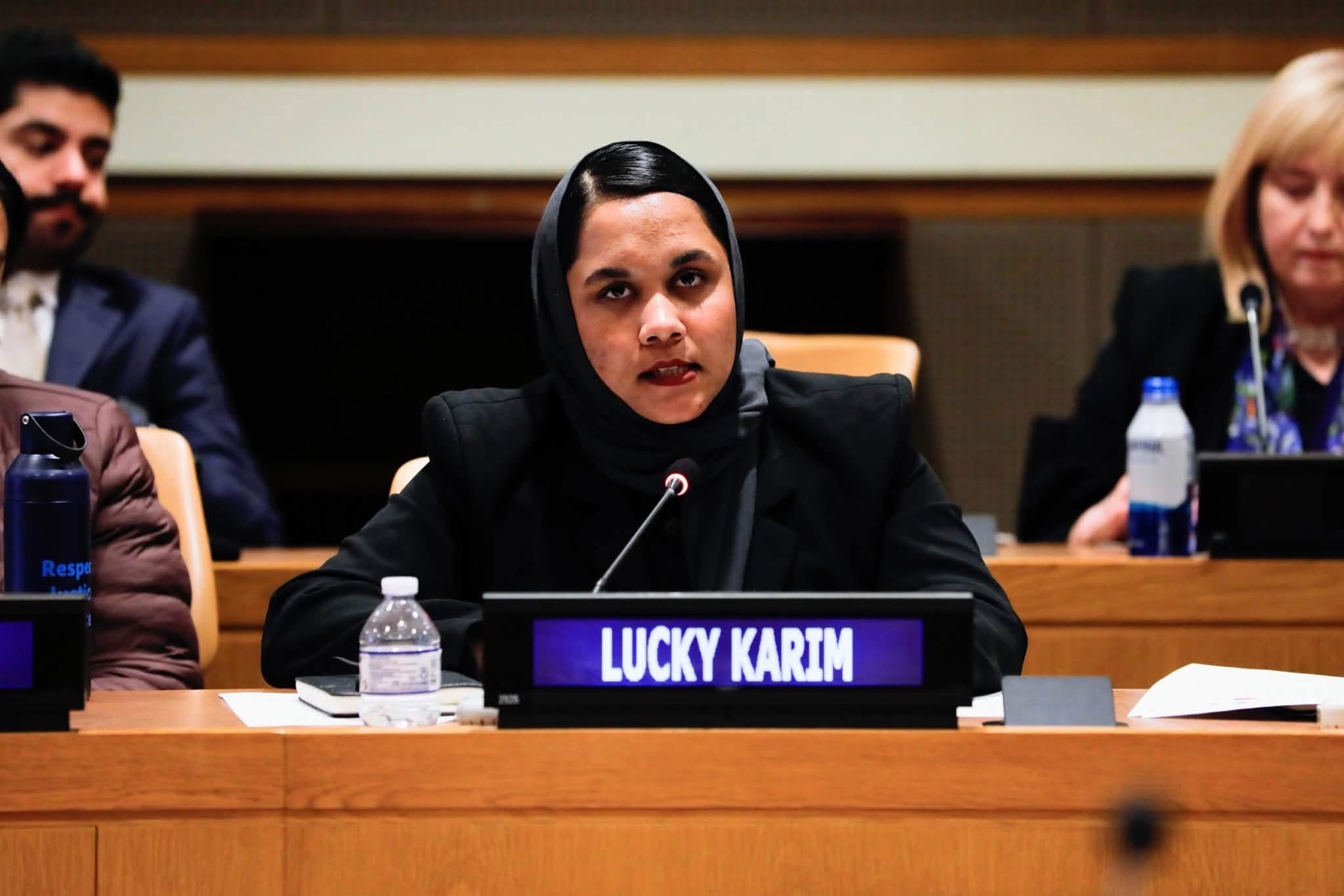
Lucky Karim, the founder of Refugee Women for Peace and Justice (RWPJ), delivered an impassioned address before the United Nations Security Council during its annual open debate on Women, Peace, and Security (WPS) on Oct. 27, warning that regional normalization with Myanmar’s military directly undermines global accountability and abandons women living under systematic terror.
Recalling how she was forced to flee Arakan State at the age of 14 alongside nearly one million other Rohingya refugees to spend six years in a refugee camp in Cox’s Bazar, Bangladesh, Karim told the U.N. that conditions across Myanmar have deteriorated dramatically ever since.
“The military and non-state actors commit atrocities and bomb civilians with impunity throughout Myanmar. Women and girls are especially targeted and face increasing sexual and gender-based violence, including in detention facilities. Soldiers gang rape and murder young girls. Armed actors use rape and starvation as weapons of war,” Karim told the council.
She underscored that the violence in Myanmar has displaced over four million people internally and forced 1.6 million into exile—the overwhelming majority women and children—while Rohingya remaining in Arakan continue to endure apartheid-like conditions, forced military recruitment, and mass killings that compel thousands to risk perilous sea journeys.
Karim directed sharp criticism at Malaysia and fellow members of the Association of Southeast Asian Nations (ASEAN) for prioritizing transactional diplomacy over human rights and international protection norms.
“The Malaysian government, and other ASEAN members, recently rolled out the red carpet to former Commander-in-Chief Min Aung Hlaing, the architect of the genocide against my people. Principles have been discarded in favor of a transactional approach; Myanmar nationals, including Rohingya refugees, are being returned to areas of active conflict in processes that are not voluntary, safe, dignified or sustainable,” added Karim.
She stated that for women fighting a return to military rule in Myanmar and for a genuine federal democracy, the U.N. Women, Peace, and Security framework has been reduced to “merely words on paper, waiting to be realized, its promises unfulfilled.”
To halt military impunity and enforce international legal commitments, Karim urged the council to move beyond rhetorical condemnations and institute concrete punitive measures.
Noting that the International Court of Justice (ICJ) is poised to issue its final ruling in The Gambia’s genocide case against Myanmar, she stressed that any favourable judgment must become a living instrument of enforcement rather than another ignored piece of paper.
Karim called on the international community to deny the regime in Naypyidaw diplomatic recognition at the U.N. headquarters in New York, impose a strict embargo on aviation fuel and weapons, back universal jurisdiction prosecutions in national courts worldwide, and directly fund grassroots women- and refugee-led organizations operating on the ground.
She concluded by reminding the U.N. that sustainable peace is impossible without addressing root political roadblocks, insisting that all future transition mechanisms guarantee the full, equal, and safe participation of women.
“Myanmar is an example of what happens when principles are set aside for political expediency. On behalf of all my Rohingya and other sisters from Myanmar, I urge you to prioritize our safety, security, participation, well-being and rights — just as the WPS agenda intended,” Karim concluded.