


Guest contributor
James Shwe
An assurance of safety is not proof of safety. For governments seeking closer relations with Myanmar’s military, that distinction should be a test of policy, not an inconvenience to be managed.
Two recent reports about Malaysia’s refugee repatriation program bring that test into focus.
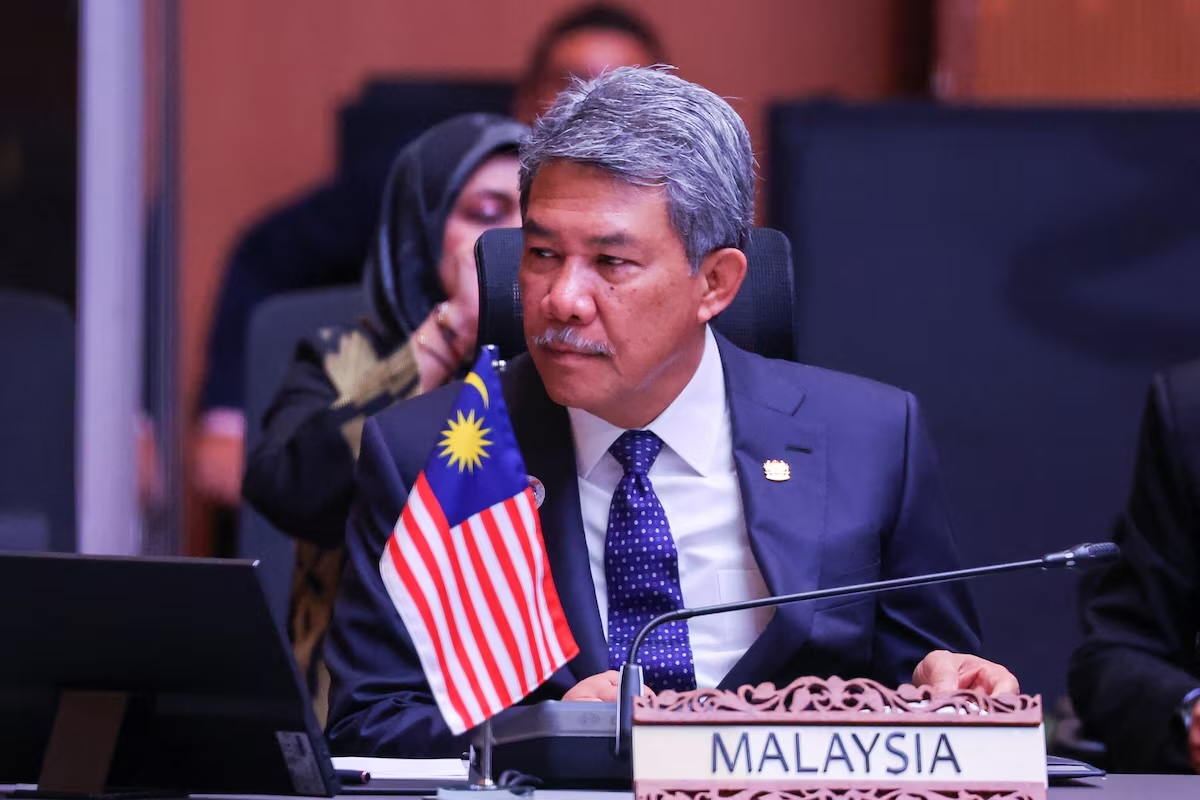
On October 26, AFP reported that Malaysian Foreign Minister Mohamad Hasan would seek clarification over reports that hundreds of returnees were being held in military detention.
Four days before, on October 22, Malaysian media reported that Home Minister Saifuddin Nasution Ismail’s parliamentary assurance that nobody would be returned to Myanmar if there was clear evidence or risk of persecution, torture or threats to life.
The parliamentary exchange matters as much as the announcement.
According to The Star newspaper in Malaysia, an MP cited international media reports about approximately 300 returnees, and the foreign minister said Malaysia would instruct its chargé d’affaires to investigate and demand that Myanmar honor its assurances.
Reporting had entered the legislature and elicited a public commitment to follow up.
This is not yet proof of protection or a policy reversal. It is an opening for accountability, and it should be treated as such rather than advertised as a victory.
Accuracy is essential.
The parliamentary exchange referred to about 300 people, while DVB reported—drawing on relatives’ accounts—that more than 400 ethnic Rakhine returnees remained in military custody.
Those figures should not be silently reconciled, nor should reported detention be presented as the completed finding of an independent investigation.
Nor should all returnees be described as Rohingya. Prime Minister Anwar Ibrahim told Parliament on October 6 that, according to records checked at that point, no Rohingya were among the September 29 group of 1,476.
That is an attributed government statement, not an independent audit. The protection principle nevertheless applies to everyone: ethnicity cannot determine whose exposure to danger deserves scrutiny.
The wider lesson is not that democratic governments are incapable of abusive policy. It is that governments should never be presumed free to pursue such policies without political, diplomatic or reputational costs.
Malaysia’s response illustrates a mechanism through which those costs can begin to arise: reporting makes an allegation visible; a legislator demands an explanation; a minister makes a commitment that can be checked.
Whether this becomes meaningful accountability depends on what follows. A promise to investigate is only the beginning.
That distinction is central to resisting “normalization creep”: the gradual acceptance of Myanmar’s military rulers through accumulated meetings, ceremonies, agreements and untested assurances.
No single encounter needs to announce formal recognition for the cumulative political benefit to matter.
Mohamad Hasan defended engagement as necessary to address the refugee crisis and said it did not amount to recognition of Myanmar’s current administration.
That distinction deserves consideration, but it cannot settle the question. The proper test is whether engagement produces independently verifiable protection, with consequences when assurances fail.
Necessary humanitarian contact should not require political rehabilitation.
Governments can negotiate access and practical arrangements while limiting ceremonial honors, publishing conditions and withholding further concessions when agreed safeguards are absent.
The same scrutiny should extend to Thailand, Japan and India, without pretending that their political systems or responses to criticism are identical.
“National interest” should begin a policy argument, not end one.
For Thailand, the question should be whether engagement actually improves border security and civilian safety.
For Japan, it should be whether policy is consistent with the standards it asks others to uphold.
For India, it should include whether short-term strategic competition risks sacrificing a durable relationship with Myanmar’s people.
These are questions about the quality of national-interest calculations, not demands that governments abandon their interests.
Even China should not be assumed to face no constraints. Reuters reported in June that President Xi Jinping called for stability in northern Myanmar and secure implementation of major infrastructure projects, while noting threats and attacks against projects in conflict areas.
This does not mean Beijing will change course because an editorial criticizes it. It means diplomatic power cannot, by itself, guarantee stability, local acceptance or investment security.
For advocacy, the implication is practical. Public scrutiny is more useful when it connects a government’s choices to identifiable risks and contradictions than when it assumes moral condemnation alone will compel a reversal.
ASEAN may have even more to lose institutionally. In their July 2026 joint communiqué, its foreign ministers reaffirmed the Five-Point Consensus as their main reference for Myanmar and called for civilian protection, an end to indiscriminate violence, humanitarian assistance and inclusive national dialogue.
If political acceptance advances without demonstrable progress against those commitments, the damage would reach beyond one disputed bilateral initiative. ASEAN would be weakening confidence in its own conditions and collective diplomacy.
This is why the media is one of the most important fronts against normalization creep, and potentially one of the most effective civilian avenues available.
Its strength is not the ability to command a government, but the ability to prevent an official account from becoming the only account.
Journalism can ask what happened after the ships arrived, whether families regained contact, and whether returnees are free to leave reception facilities.
It can compare a minister’s assurances with independently established conditions. It can keep a decision under scrutiny after the photographs and press conferences have disappeared from public attention.
The next questions for Malaysia should therefore be specific. Where are the people reportedly detained, on what grounds are they held, and can independent protection personnel speak with them confidentially?
What findings will be reported to Parliament, and by when? What happens to further returns if safety cannot be verified?
Malaysia should pause further transfers where protection cannot be independently established, permit individual assessments and meaningful scrutiny of consent, and seek independent post-return monitoring.
Signed consent should be examined as evidence, not treated as a substitute for determining whether a person had a genuinely free and informed choice.
The U.N. High Commissioner for Refugees has expressed concern about the recent return of nearly 1,500 Myanmar nationals amid continuing conflict, insecurity and serious human-rights concerns.
The press must also remain independent of those advocating these safeguards.
Journalists are not a movement’s publicity department, and credible reporting must examine abuses and unsupported claims regardless of who is responsible.
Advocates strengthen scrutiny by supplying verifiable evidence, protecting vulnerable sources and accepting corrections, not by demanding favorable coverage.
Nor is media attention sufficient on its own. It becomes more consequential when legislators pursue answers, diplomats seek access, protection organizations investigate and governments attach conditions to cooperation.
The objective should be a documented improvement in people’s safety, not simply a more uncomfortable press conference.
Fatalism is therefore as mistaken as triumphalism. Governments may ignore criticism, and public pressure may fail to change a particular decision.
But it does not follow that scrutiny is useless or that normalization is inevitable.
The lesson from Malaysia is to keep the question open until the evidence answers it.
An assurance must lead to verification, an investigation to findings, and findings to action.
The media cannot guarantee that chain, but it can make it harder for governments to break it unnoticed.
James Shwe is an independent Myanmar-American democracy advocate based in California.
DVB publishes a diversity of opinions that does not reflect DVB editorial policy. We’d like to hear what you think about this or any of our stories: [email protected]