


Malaysia’s shifting position on repatriation exposes a fundamental problem: Returning refugees to Myanmar cannot resolve the crisis without equal rights, accountability, and credible international protection.
Guest contributor
Shwe Maung
“The Rohingya crisis can only be resolved in Myanmar.”
This statement has become a familiar refrain among political leaders, diplomats, and regional policymakers. Yet its deeper political meaning and practical requirements remain largely undefined.
Almost everyone agrees on where the crisis must be addressed. But there is far less agreement on what a genuine resolution would require, who should implement it, and who would guarantee the safety and rights of returning Rohingya.
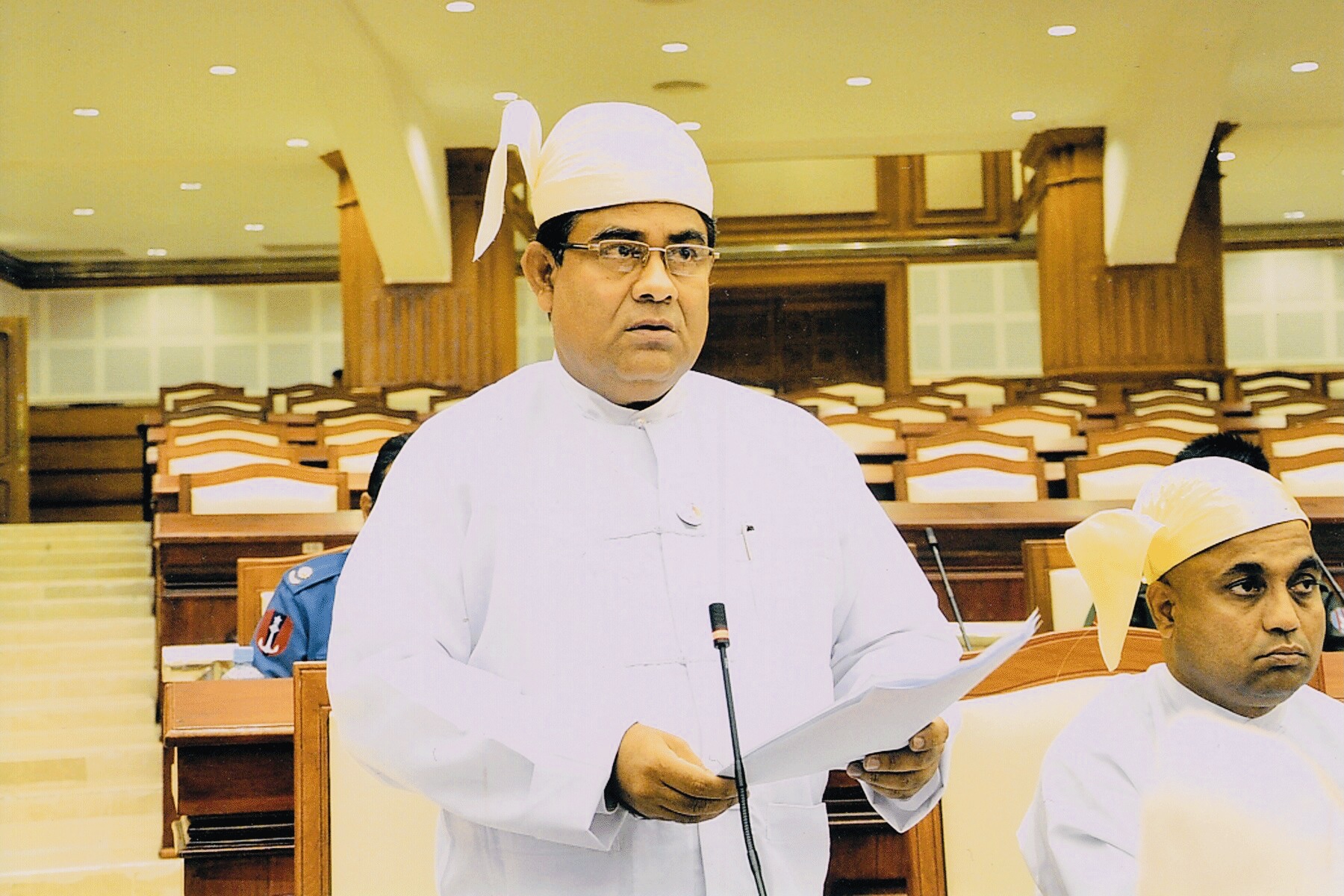
As a Rohingya who served as an elected Member of Myanmar’s Parliament, I believe this distinction is fundamental.
The Rohingya crisis cannot be resolved simply by returning refugees to Arakan, Myanmar. It can only be resolved by eliminating political conditions that forced them to flee.
Malaysia’s recent experience with repatriation illustrates clearly why this distinction matters.
Malaysia’s repatriation reversal: A warning for ASEAN
In September 2026, Malaysia began implementing an agreement with Myanmar military-backed authorities to repatriate thousands of Myanmar nationals.
On September 29, approximately 1,476 people were despite warnings from the U.N. and human rights organizations about the dangers awaiting returnees.
The UNHCR expressed concern that some individuals might require international protection and questioned if decisions to return were genuinely voluntary, particularly because those involved had been held in immigration detention.
Malaysia subsequently clarified that Rohingya were not included in that initial group.
More recently, Malaysia’s Foreign Minister Mohamad Hasan, publicly acknowledged the grave danger of returning Rohingya to a territory controlled by the Arakan Army (AA)
Speaking in parliament, he reportedly declared:
“Sending Rohingya back means we are sending them back to be slaughtered.”
This is a significant acknowledgement of the scrutiny realities confronting Rohingya civilians in Arakan.
Malaysia’s apparent change in emphasis – from pursuing repatriation through engagement with Myanmar authorities to explicitly recognizing the dangers facing Rohingya returnees – should prompt a broader reassessment of regional policy.
However, the foreign minister also criticized UNHCR for its limited success in third-country resettlement.
That criticism requires perspective. UNHCR is not a sovereign government. It cannot compel countries to accept refugees.
Moreover, traditional resettlement countries have increasingly restricted admission opportunities.
More importantly, many Rohingya do not want permanent exile or indefinite definite dependence on third-country resettlement, but they want to return to their ancestral homeland.
The real solution is neither forced repatriation nor permanent refugeehood. It is a safe, voluntary, dignified, and internationally protected return to Arakan.
A warning before Malaysia’s repatriation initiative
On September 24, five days before Malaysia began its first major repatriation operation, the Arakan Rohingya National Congress (ARNC), under my chairmanship, sent an open letter to Malaysian Prime Minister Anwar Ibrahim.
Copies were addressed to the Prime Minister of Bangladesh, the U.N. Secretary-General, the President of the U.N. General Assembly, the President of the U.N. Security Council for September, and the Secretary General of the Organization of Islamic Cooperation.
The letter warned that premature repatriation could expose Rohingya to renewed atrocities, displacement, forced recruitment, exploitation, and use as human shields amid the continuing conflict between Myanmar’s military and the AA.
It also cautioned that diplomatic engagement over repatriation must not confer political legitimacy on Myanmar’s authorities without establishing credible guarantees for refugee protection.
We urged Malaysia and Bangladesh to mobilize the U.N., the UNSC, the OIC, the Association of Southeast Asian Nations (ASEAN), and other international partners to develop a practical international protection framework before any large-scale Rohingya repatriation.
Central to that proposal was consideration of an internationally monitored, protected, and demilitarized Safe Zone in Arakan, supported by appropriate UN involvement and credible security guarantees.
Such an arrangement would require serious international negotiations, a viable legal mandate, effective monitoring, humanitarian access, and safeguards against coercion by armed actors. It cannot be established merely through diplomatic declarations.
The purpose of our appeal was not to prevent Rohingya from returning home. It was to prevent another tragedy disguised as repatriation as success.
Malaysia’s foreign minister has now publicly recognized the grave dangers that prompted our warning. But recognition must be followed by concrete international action.
The crisis has more than one source of persecution
For decades, international attention has understandably focused on Myanmar’s military and successive governments.
The military’s 2017 operations drove hundreds of thousands of Rohingya into Bangladesh amid widespread atrocities. Myanmar’s discriminatory citizenship policies, restrictions on movement, and denial of Rohingya identity have also contributed to generations of persecutions.
Myanmar’s authorities bear profound responsibility for these injustices.
However, the historical roots of the crisis can’t be understood only through the actions of successive military governments.
In my assessment, exclusionary Rakhine ethnic nationalism has also played a significant role in fostering hostility toward the Rohingya and obstructing their political recognition and equal rights.
This does not imply collective responsibility among Rakhine people. The Rakhine population has also suffered extensively under Myanmar’s military rule, legitimate aspirations for political autonomy must be respected.
The problem is not Rakhine identity. It is extremist nationalism that seeks to define Arakan as the exclusive homeland of one ethnic community while denying the historical presence and rights of another.
During my parliamentary tenure, I witnessed how questions of Rohingya identity and citizenship were manipulated for political purposes.
In 2015, I was disqualified from contesting the general election on citizenship grounds despite having served as an elected Member of Parliament.
Today, the rise of the Arakan Army has another dimension to this longstanding political crisis.
The AA exercises effective ground control over much of Arakan State, including areas traditionally inhabited by Rohingya.
Serious allegations of killings, forced displacements, and other abuses against Rohingya civilians have been made since 2024.
Replacing Myanmar military domination with another form of ethnic exclusion would not resolve the Rohingya crisis. It would merely reproduce the same persecutions under a different authority.
Any durable settlement must therefore address the responsibilities of both Myanmar’s military and the AA, alongside the broader political structures and extremist ideologies that have enabled persecution.
What must resolving the crisis in Myanmar actually mean?
If the international community genuinely believed that the Rohingya crisis can only be resolved in Myanmar. It must translate that statement into specific political commitments.
First, recognition of Rohingya identity and equal citizenship.
Second, accountability for crimes by all perpetrators.
Third, effective international protection prior to repatriation.
Fourth, meaningful Rohingya participation.
Fifth, inclusive governance in Arakan.
These are not optional additions. They are foundations of a genuine solution
ASEAN must move beyond diplomatic statements.
Malaysia’s foreign minister’s recent statements present an opportunity for ASEAN to reconsider its approach.
Malaysia deserves recognition for acknowledging that returning Rohingya under current conditions could expose them to grave danger. But acknowledging danger is only the beginning.
Malaysia, Bangladesh, and other concerned governments should now work together to advance a protection-first diplomatic initiative.
The UNGA, UNSC, OIC, and relevant international partners should examine feasible mechanisms for civilian protection, international monitoring, humanitarian access, and accountability in Arakan.
Any protected-zone proposal must be carefully assessed for legal authority, security, operational feasibility, and the consent and protection of affected civilians.
A nominal safe zone without credible enforcement could create further dangers.
Equally important, diplomatic engagement with Myanmar’s military leadership must not become a means of normalizing impunity by passing the rights of the Rohingya.
ASEAN cannot credibly promote a durable solution while leaving the fundamental questions of identity, citizenship, security, and political inclusion unanswered.
Nor should Bangladesh be expected to shoulder the refugee burden indefinitely while the underlying political crisis remains unresolved.
The international community must stop treating repatriation numbers as a principal measure of progress.
The real measure of success is whether Rohingya can return to their homeland and remain there permanently, safely, freely, and as equal citizens.
The location of the solution is not the solution itself
The Rohingya crisis is not simply a humanitarian emergency. Essentially, this is a political crisis about identity, citizenship, ethnic nationalism, discrimination, control over territory and denial of equal rights.
Humanitarian assistance remains indispensable, but food, shelter, and refugee management cannot resolve the political causes of displacement.
Likewise, physically returning refugees to Myanmar without transforming those conditions cannot produce lasting peace.
The geographical location of a solution must never be confused with its political substance.
Myanmar is where the crisis must ultimately be resolved. But that does not mean Myanmar’s authorities – or any armed organization exercising territorial control – can be allowed to determine the solution unilaterally.
The Rohingya themselves must be central participants, and the international community must help establish credible guarantees of justice, security, and equal rights.
Malaysia’s recent acknowledgement of dangers of repatriation reinforces a lesson that should have been understood long ago: Returning people to the place from which they fled is not the same as restoring the rights and security they lost.
The Rohingya do not seek permanent refugeehood. We seek the right to return to our ancestral homeland and rebuild our lives in peace, dignity, freedom, and equality.
Therefore, the real question is no longer simply how the Rohingya crisis must be resolved.
It is how, by whom, under what political conditions, and with what internationally credible guarantees of justice, protection, and lasting peace.
Until those questions are answered, the statement: “The Rohingya crisis can only be resolved in Myanmar” will remain another unfinished diplomatic promise.
Shwe Maung is a former elected Member of Myanmar’s Parliament (2010 – 2015), representing Buthidaung Township in Arakan State. He is Chairperson of the Arakan Rohingya National Congress (ARNC) and President & CEO of the Arakan Institute for Peace and Human Rights (AiPAH).
DVB publishes a diversity of opinions that does not reflect DVB editorial policy. We’d like to hear what you think about this or any of our stories: [email protected]