


Guest contributor
James Shwe
When the U.S. Mission to Burma’s new Integrated Country Strategy circulated online last week, the reactions were quick and often dark. Some read it as proof that Washington has traded democracy for rare earths.
Others saw a green light for engagement with the junta, or the revival of the old ceasefire roadmap. The document says something important, but not everything people fear, and its future will be shaped by forces it did not anticipate, including this week’s U.S. midterm elections.
What the ICS is, and who wrote it
An Integrated Country Strategy is not a treaty, a law, or a declaration of recognition. It is a routine four-year plan that every U.S. embassy produces, drafted under the Chief of Mission with input from the U.S. agencies at the embassy and reviewed in Washington.
It turns the sitting administration’s national security priorities into embassy work, guides budget requests, and sets performance targets. Burma’s 2022 strategy reflected the Biden administration; this one reflects President Trump’s.
The 2026 Burma ICS was approved on August 31 and released in October. Documents like this take months to develop, so it reflects conditions well before its approval and does not account for this week’s elections.
It does not lift sanctions, recognize the military regime, or override laws passed by Congress.
What the strategy intends
The document says it is “grounded in President Trump’s America First Foreign Policy” and calls Burma critical because of its location “on the doorstep of China and India.”
Its four goals are protecting Americans from transnational threats such as scam centers, narcotics, and visa overstays; reducing the U.S. trade deficit; advancing an inclusive peace agenda; and expanding U.S. regional influence.
Its targets include at least three commercial or investment deals worth more than $5 million USD each, tripling Myanmar’s imports of U.S. goods by the end of 2030, closer cooperation with Myanmar authorities on returns of Myanmar nationals, and humanitarian assistance reaching three million vulnerable people.
What it leaves out is just as telling. It does not mention democracy, the coup, elections, political prisoners, the National Unity Government, or the Rohingya.
It refers to “Burmese authorities” and “Naypyitaw decision makers,” language that permits working contact without formal recognition.
Human rights and good governance appear only as supporting language under the peace goal.
The most consequential passage is Objective 3.2. It commits the embassy to facilitate at least three forums producing “concrete agreements or policy proposals advancing fiscal federalism and territorial demarcation,” which “will create opportunities to access Burma’s bountiful rare earth resources and combat scam centers.”
Peace-building and resource access share a single sentence.
All of these are targets, not achievements.
A shift in priorities, not an abandonment
Compared with the 2022 strategy, which made restoring Myanmar’s democratic path a central goal, this is a real change. Security, trade, minerals, and competition for influence now lead.
But calling it an abandonment of democracy goes too far. The BURMA Act, enacted in the FY2023 National Defense Authorization Act, makes it U.S. policy to support the people of Burma in their struggle for democracy, freedom, human rights, and justice.
An embassy plan cannot repeal a law, and existing sanctions remain in force unless formally changed.
The risks are still real. Engagement with Naypyitaw could hand the regime a propaganda claim to relevance.
Commercial targets could tempt officials to count contracts rather than lives protected.
And the quieter danger is divide-and-conquer: separate deals with individual groups, or forums that include some and leave others out.
Ceasefire pressure and the “peace trap”
Many fear the resistance will be pushed into talks with the military on unfavorable terms, perhaps through a revived Nationwide Ceasefire Agreement. The text does not support that.
The document never mentions the NCA. Objective 3.1 supports a durable ceasefire as a pathway to a peace agreement by July 2030. Objective 3.2 is a separate track whose headline goal is to “reduce divisions among state and local opposition entities” ahead of nationwide peace discussions.
Its forums concern fiscal federalism, meaning how revenues and fiscal powers are shared, and territorial demarcation, meaning how boundaries are defined, not who owns territory.
Read fairly, Objective 3.2 implies Washington intends to help the resistance resolve its own differences over revenue and boundaries, long among its hardest internal questions.
The overview also mentions “central, state, and ethnic organizations” without defining “central,” and the document does not say who will be invited or whether the military will take part.
Those questions deserve watching, but nowhere does the strategy commit the United States to broker reconciliation between the military and the resistance.
That is an opportunity. A resistance that agrees on federal arrangements negotiated from strength, and resistance bodies have already done substantial work on them.
Nor is 2030 an ultimatum. It is the planning horizon of a four-year strategy, with no penalty for any Myanmar actor and no guaranteed outcome.
A view from Beijing
A Chinese perspective offers a useful reality check. In an interview with Barbed Wires, Liu Yun, a China-based independent researcher who advises corporate clients, calls the ICS “essentially a multi-year planning framework,” not a sign that Myanmar has become a major U.S. priority.
He expects near-term cooperation to center on scams and immigration, with rare earths and peace talks “much more difficult to advance.”
He also warns that Naypyitaw’s outreach to Washington may give it “additional diplomatic room for maneuver,” and that Beijing does not see the resistance as unified, dealing with its groups separately.
He notes the Kachin Independence Army controls important rare-earth mining areas, but says China could engage the NUG or the Steering Council for the Emergence of a Federal Democratic Union more extensively if they become indispensable to a settlement.
These are one analyst’s views, not Beijing’s official position, but the lesson matches the ICS: outside powers reward a resistance that is coordinated and indispensable, and exploit one that is divided.
How the midterm elections change the picture
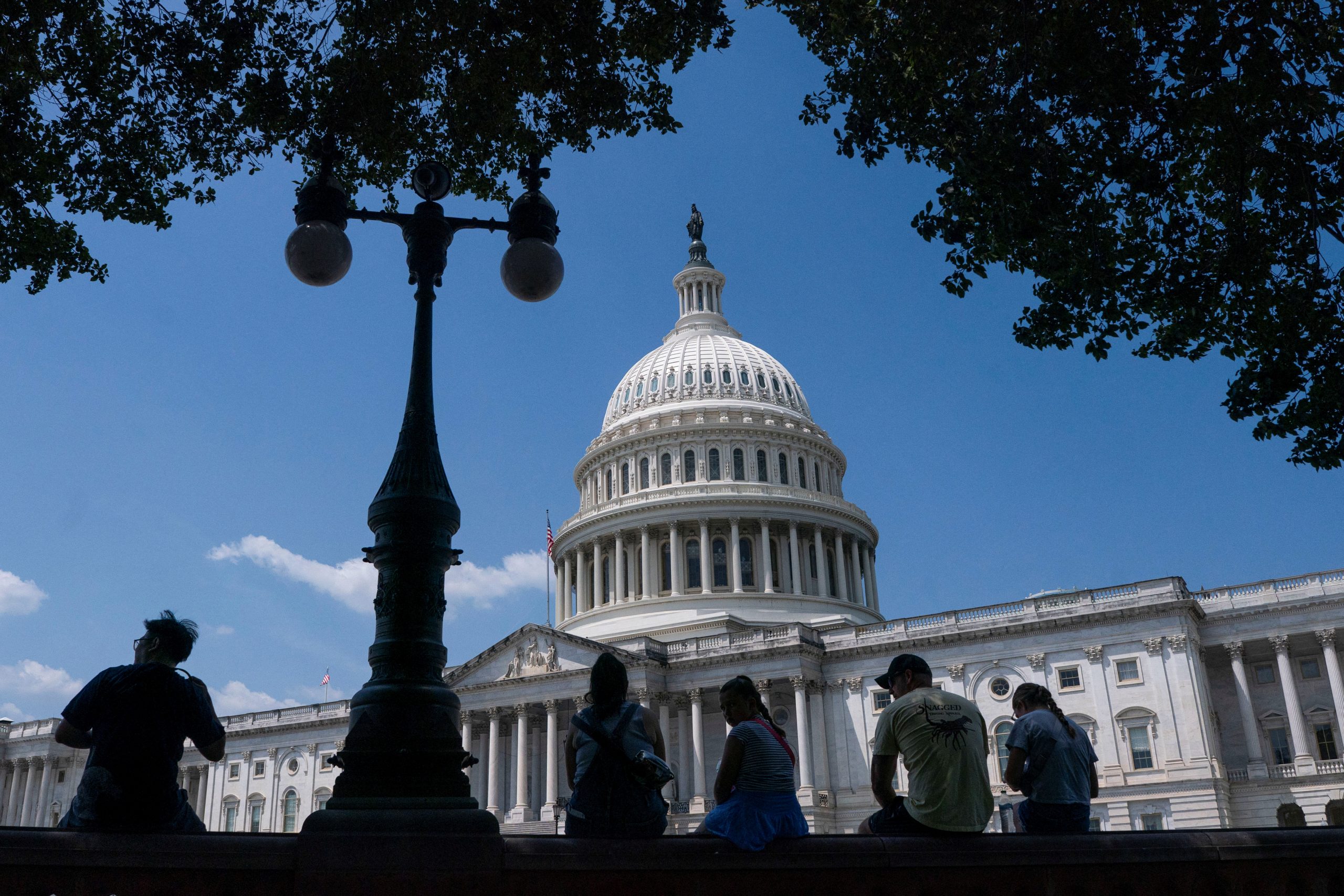
On November 3, Democrats won control of both the House and the Senate, according to NPR and NBC News. From January, the administration’s foreign policy will face stronger checks and balances.
Congress controls appropriations and can protect democracy and humanitarian funding for Myanmar, or bar U.S. funds from benefiting military-linked entities.
It can hold hearings, demand reporting, and direct Government Accountability Office reviews. The Senate confirms ambassadors and senior diplomats.
Support for Myanmar’s democracy has never belonged to one party. The BRAVE Burma Act was introduced by Democrat Chris Van Hollen and Republican Todd Young, with Republican Mitch McConnell and Democrat Jeff Merkley among its supporters.
A Democratic Congress strengthens that bipartisan base rather than replacing it.
None of this automatically reverses the strategy; the President keeps broad diplomatic authority and the veto.
But engagement with Naypyitaw is now more likely to come with conditions and scrutiny.
The ICS will affect the Spring Revolution, but not as badly as some predict.
Takeaways for the resistance
First, read the document, not the rumors. Misreadings serve the regime’s information war better than any embassy plan.
Second, unite on our own terms. Washington speaks of reducing divisions, and Beijing already deals with the resistance group by group.
Shared minimum demands, a channel for sharing information about outside meetings, and consultation before any agreement affecting an ally’s land or people would blunt divide-and-conquer tactics.
Each group should choose its own representatives, and none should make separate deals at its allies’ expense.
Third, use the opening in Objective 3.2 by arriving with joint proposals on fiscal federalism and boundaries, rather than waiting to be convened on others’ terms.
Fourth, insist on verification before concessions.
Through the new Congress, advocates can ask that any easing of sanctions or expansion of commercial ties follow independently verified progress: an end to airstrikes on civilians, unimpeded humanitarian access, measurable human rights improvements, and meaningful participation of resistance forces and affected communities.
Fifth, put local consent at the center of the resource question. Rare earths give leverage with more than one power only if no partner can play groups against each other.
The tests should be community consent, fair revenue sharing, environmental protection, and accountable local governance.
Sixth, work both sides of the aisle and the region. Democrats will chair committees, but durable law needs Republican votes.
And since the strategy pledges coordination with ASEAN, advocates should press regional partners to keep the junta excluded from ASEAN’s top tables, a key barrier against normalization by stealth.
The ICS shows where the administration would like to go. Congress, public opinion, and the unity of the resistance will help decide how far, how fast, and on what terms.
That is not a reason for despair. It is a reason to get to work.
James Shwe is a Los Angeles-based engineer and advocate for democracy in Myanmar.
DVB publishes a diversity of opinions that does not reflect DVB editorial policy. We’d like to hear what you think about this or any of our stories: [email protected]